

I find spider silk truly fascinating. It’s a natural material that scientists and engineers love to study. Its strength, elasticity, and versatility are unmatched, making it a dream for researchers around the world.
Spider silk is perfect for many uses, from medical research to making clothes. As we learn more about spider silk, we see its vast possibilities. It shows us how nature can inspire amazing things.
Key Takeaways
- The exceptional strength and elasticity of spider silk make it a valuable material for various industries.
- Spider silk has great uses in medical research and making clothes.
- The unique properties of spider silk are being explored for new uses.
- The benefits of spider silk are recognized in many fields.
- More research on spider silk will reveal even more exciting possibilities.
What is Spider Silk?
Spider silk is a natural wonder known for its strength, elasticity, and unique production. It’s a protein-based fiber made by spiders for web-making, catching prey, and protection.
The Basics of Spider Silk
Spider silk is made up of proteins, mainly spidroins. These complex molecules are what make spider silk so special. Spiders secrete these proteins from glands in their bodies.
The silk’s structure is key to its strength and durability. It has a core of spidroins and a protective coating. This helps the silk come out smoothly from the spider’s spinnerets.
Types of Spider Silk
Spiders make different kinds of silk, each with its own role. The main types are:
| Type of Silk | Function | Characteristics |
|---|---|---|
| Dragline Silk | Used for web framework and safety lines | High strength, low elasticity |
| Capture Spiral Silk | Used for catching prey | Sticky, high elasticity |
| Tubuliform Silk | Used for egg sacs | Soft, protective |
How It’s Produced by Spiders
Spider silk production is a detailed process. Spiders secrete spidroins from glands in their abdomen. These are then turned into silk threads through spinnerets.
Producing spider silk involves several steps. First, spidroins are made. Then, silk threads are formed. Lastly, these threads are shaped into their final form. Spiders can change their silk’s properties by adjusting the spidroins and production conditions.
The Unique Properties of Spider Silk
Spider silk is known for its amazing strength, flexibility, and ability to break down naturally. These qualities make it very interesting for many uses, from medical breakthroughs to green fabrics.
Strength and Elasticity
Spider silk is incredibly strong and stretchy. It’s stronger than steel and can stretch a lot without breaking. This makes it perfect for things that need to be strong and flexible.
- Can withstand a lot of stress without getting damaged
- Is very elastic, so it can absorb a lot of energy
- Is both strong and flexible, making it great for many uses
Biodegradability
Spider silk is also very good for the environment because it breaks down naturally. This is different from many man-made materials. It’s great for those who want to help the planet with their choices.
- Breaks down naturally, which is good for the environment
- Is a green alternative to materials that don’t break down
- Meets the need for more eco-friendly products
Lightweight Nature
Spider silk is also very light. Its lightness, combined with its strength, makes it very appealing. It’s perfect for many fields, including textiles and medicine. It could lead to the creation of new, light, and strong materials.
- Has a high strength-to-weight ratio
- Is great for situations where weight matters
- Opens up new possibilities for material design
Historical Uses of Spider Silk
Spider silk has been important for centuries. It was used in many ways across different cultures. People were amazed by its special properties.
Ancient Cultures and Spider Silk
In ancient times, spider silk was valued for its strength. In Pacific Island cultures, it made strong fishing nets and lines. This was because of its incredible tensile strength.
It was also used in ceremonies. It showed wealth and status in some societies. This shows how valuable and versatile spider silk was.
Traditional Medical Applications
Spider silk was used in traditional medicine too. Its ability to blend with the body and break down made it great for wound care. It was used for dressings and stitches.
Some believed it had healing powers. This added to its medical uses.
Textiles and Fashion
In textiles and fashion, spider silk was loved for being light and stretchy. It was used to make fine clothes and fabrics. These were both strong and lovely.
| Historical Use | Description | Culture/Region |
|---|---|---|
| Fishing Nets | Used for its strength and durability | Pacific Island Cultures |
| Ceremonial Items | Symbolized wealth and status | Various Ancient Cultures |
| Wound Dressings | Utilized for its biocompatibility and biodegradability | Traditional Medical Practices |
| Fine Garments | Prized for its lightweight and elastic properties | Historical European Fashion |
In conclusion, spider silk has been used in many ways throughout history. Its unique qualities and the creativity of our ancestors are reflected in these uses.
Modern Applications of Spider Silk
Spider silk is being used in many new fields. Its special properties make it perfect for different uses. This includes medical, sustainable fabrics, and building materials.
Biomedical Innovations
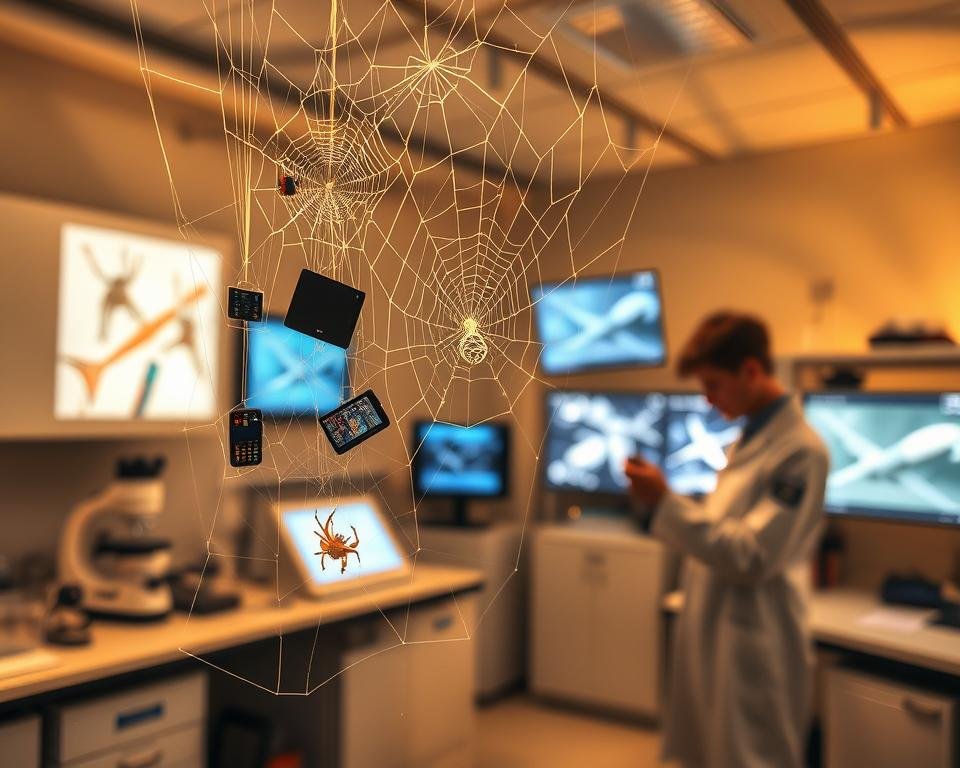
Spider silk is very promising in medicine. It’s being looked at for wound healing and tissue engineering. This is because it’s safe for the body and very strong.
Scientists are making synthetic spider silk through genetic engineering. This lets them make materials for specific medical needs.
Spider silk proteins can help create scaffolds for tissue engineering. These scaffolds help cells grow and form new tissue. This is key for fixing or replacing damaged tissues.
Eco-friendly Fabrics
Spider silk is also used to make eco-friendly fabrics. Its natural qualities make it a great choice for the fashion world. Companies are making fabrics that feel like spider silk, which is good for the planet.
These fabrics are not only good for the environment. They’re also durable and comfy. This makes them perfect for many uses, from fancy clothes to outdoor gear.
Construction and Engineering
In construction and engineering, spider silk is being studied for its strength. Researchers want to see if it can make materials that are both strong and light. They’re looking at how spider silk proteins can be used in building materials.
Using spider silk in building could lead to big changes. It could make materials that are strong, last long, and are good for the planet.
The Science Behind Spider Silk Production
Exploring spider silk production shows a mix of proteins, molecular structures, and environmental factors. These elements make the silk incredibly strong and elastic.
Spider silk is mostly proteins, like fibroin, made of amino acids. The special arrangement of these acids gives the silk its strength and stretchiness. Different spiders and their silk types have unique amino acid mixes.
Proteins and Amino Acids
The proteins in spider silk are key to its amazing qualities. Spidroins, the main proteins, have repeating sequences of alanine and glycine. These sequences help form beta-sheets, which make the silk strong.
Research found that certain amino acids greatly impact the silk’s properties. Glycine makes the silk stretchy, while alanine boosts its strength.
| Amino Acid | Role in Spider Silk |
|---|---|
| Glycine | Contributes to elasticity |
| Alanine | Enhances strength |
| Serine | Influences silk’s mechanical properties |
The Spinning Process
How spiders spin their silk is truly amazing. They use glands at the end of their abdomen to make silk. The silk is made by pushing liquid protein through a duct and then drawing it out to align the molecules.
“The spinning process of spiders is a remarkable example of natural engineering, where the combination of chemical composition and mechanical processing results in a material that outperforms many synthetic fibers.”
Factors Affecting Quality
Many things can change how good spider silk is. This includes the environment, what the spider eats, and genetics. For example, a special diet can make the silk better.
Scientists are always learning more about what affects spider silk quality. They want to know how to make the best silk. This could help make synthetic spider silk better.
By studying how spider silk is made, we can create new materials. These could change many fields, from clothes to medical devices.
Challenges in Harvesting Spider Silk
Getting spider silk is harder than it looks. It’s a complex task with many hurdles. Researchers and producers face these challenges to use this amazing material.
Collecting Spider Silk
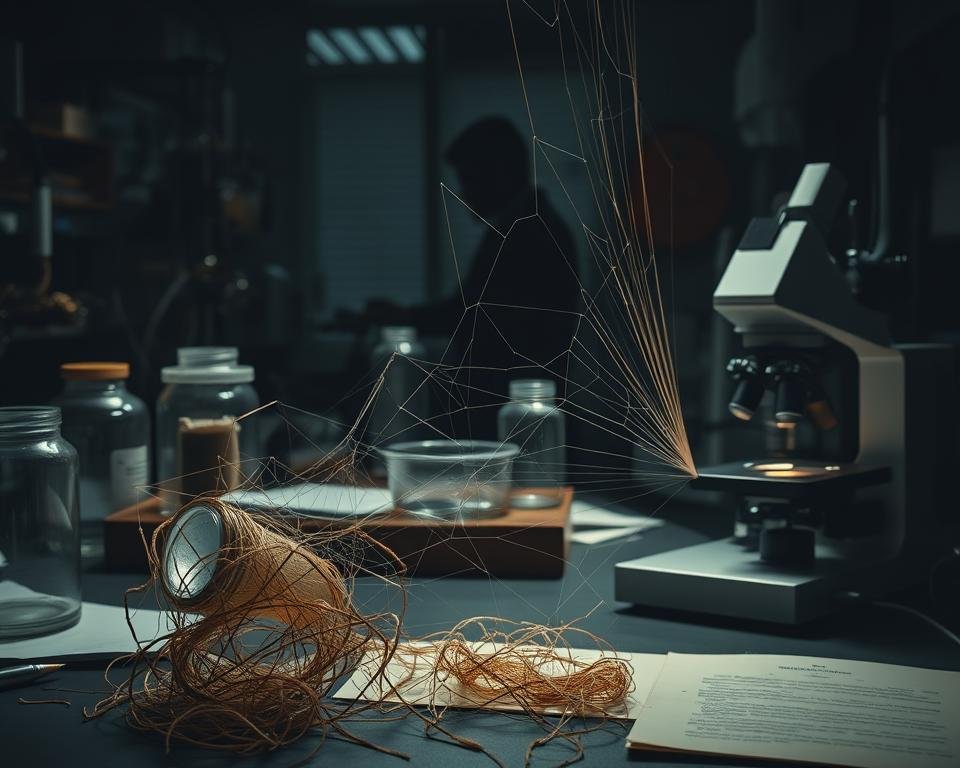
Getting spider silk is a big challenge. Spiders make silk in small amounts. It’s hard to get it without hurting the spider.
Experts are trying different ways to get spider silk. They use manual extraction and specialized equipment. This equipment helps get silk without stressing the spiders.
For more info on spider silk strength, check this article on spider silk research.
Ethical Considerations
Ethics are key in getting spider silk. It’s important to not harm the spiders. We need methods that are both efficient and kind to spiders.
This includes how we treat and house spiders. It’s all about their well-being during silk collection.
Technological Limitations
There are also tech challenges in making spider silk. Scaling up production while keeping quality is hard. We need better tech to make silk production more efficient and viable.
In short, getting spider silk faces many challenges. These include the collection process, ethics, and tech. Overcoming these is key to making spider silk better for industries.
Spider Silk vs. Synthetic Alternatives
When we talk about advanced materials, spider silk and synthetic options are key. Each has its own strengths and uses, fitting different needs.
Comparing Durability
Durability is a big deal when we look at spider silk and synthetic fibers. Spider silk is known for its amazing strength and stretchiness. It’s one of the toughest natural materials out there.
Synthetic fibers like nylon or Kevlar are also very durable. But, their strength and stretchiness can vary based on how they’re made.
| Material | Strength (MPa) | Elasticity (%) |
|---|---|---|
| Spider Silk | 1,300 | 30-40 |
| Kevlar | 3,600 | 3-4 |
| Nylon | 900 | 18-20 |
The table shows spider silk’s great stretchiness compared to Kevlar’s high strength but low stretch.
Environmental Impact
Looking at the environmental side, spider silk is a winner. It’s biodegradable and comes from nature. Synthetic fibers, made from oil, can harm the environment.
“The environmental benefits of using biodegradable materials like spider silk are substantial, as they reduce the reliance on non-renewable resources and minimize waste.”
But, making synthetic spider silk through genetic engineering might be a greener choice than old synthetic materials.
Cost Considerations
Cost is a big factor too. Spider silk is hard to get and expensive. Synthetic fibers, made in big batches, are cheaper.
But, new biotech is making synthetic spider silk cheaper. This could make it a better choice soon.
In short, picking between spider silk and synthetic fibers depends on what you need. Think about durability, how it affects the planet, and cost. As tech gets better, we’ll see more cool uses for spider silk, natural and synthetic.
The Role of Spider Silk in Biotechnology
Biotechnology is using spider silk’s amazing qualities for new medical and industrial solutions. Spider silk is strong, elastic, and breaks down naturally. These traits make it perfect for many biotech innovations.
Drug Delivery Systems
Spider silk is key in making better drug delivery systems. Scientists are making drug carriers from spider silk proteins. This can make treatments work better and have fewer side effects.
Spider silk nanoparticles can be designed to reach specific cells. This precise delivery is a big step forward in biotechnology.
A study in Nature Communications found spider silk biomaterials are great for controlled drug release. They could be a new way to deliver medicines.
“The use of spider silk in drug delivery systems represents a significant advancement in the field of biotechnology, enabling more targeted and efficient treatments.”
Tissue Engineering
Spider silk is also being studied for tissue engineering. It’s safe for the body and has the right mechanical properties. This makes it great for creating scaffolds that help grow new tissue.
| Application | Benefits |
|---|---|
| Drug Delivery | Targeted delivery, improved efficacy, reduced side effects |
| Tissue Engineering | Biocompatible scaffolds, promotes tissue regeneration |
Research Innovations
Spider silk research has led to many new ideas in biotechnology. Scientists are finding new ways to use spider silk’s properties. For example, they’re making lots of spider silk proteins through genetic engineering.
As spider silk research grows, we’ll see more cool uses in biotechnology. This could include medical devices and eco-friendly materials. The future of spider silk in biotechnology looks very promising.
Future Prospects of Spider Silk
Research into spider silk is uncovering its many uses. Its unique qualities make it perfect for several fields, like medicine and textiles.
Breakthroughs in Production
Producing spider silk has been a big challenge. But, new lab methods are making it easier. Scientists can now make spider silk proteins through genetic engineering and fermentation.
This approach lets us get more spider silk without hurting spiders. It also makes the silk cheaper, which helps with its use in business.
Market Demand
Spider silk has a huge market. Its strength, stretchiness, and ability to break down naturally are key. It’s great for medical uses, like implants and bandages, and for making strong, eco-friendly fabrics.
Market studies show the spider silk market will grow a lot in the next ten years. This growth will come from more demand and better ways to make spider silk.
Collaborations and Innovations
Working together is key for spider silk’s future. Scientists and companies can solve problems and create new products.
For example, teams of biotech firms and textile makers are making better fabrics. Researchers and medical device companies are also coming up with new medical tools.
| Industry | Potential Applications | Benefits |
|---|---|---|
| Biomedical | Medical implants, wound dressings | Biocompatibility, biodegradability |
| Textiles | High-performance fabrics, sustainable clothing | Strength, elasticity, eco-friendly |
| Composites | Aerospace materials, sports equipment | Lightweight, high strength |
Fascinating Facts About Spiders and Silk
Spider silk has amazed humans for centuries. It’s not just for its amazing properties but also for the interesting facts about spiders. Exploring spiders and their silk reveals fascinating truths, myths, and misconceptions.
Myths and Misconceptions
Many think all spiders are poisonous. But, most are not harmful to humans. The fear of spiders, called arachnophobia, is common. Yet, knowing more about spiders can help clear up myths.
Spider silk is often linked to fear, but it has many beneficial uses. It’s used in biomedical fields and eco-friendly fabrics.
Interesting Species of Spiders
There are over 48,000 known spider species, each unique. The golden orb spider makes silk that’s strong and golden. The Darwin’s bark spider produces some of the strongest silk for its size.
These spiders have evolved amazing ways to build webs and catch prey. They show the diversity and adaptability of spiders.
Spider Silk in Popular Culture
Spider silk has been in popular culture, like in books and movies. It’s often shown as incredibly strong, which is true. Researchers are looking into its industrial applications, like new textiles and medical materials.
As we learn more about spider silk, its uses are becoming clearer. It could be used in medical sutures and sustainable building materials. Studying spiders and their silk can lead to new technologies and help us appreciate nature’s wonders.
How to Get Involved with Spider Silk Research
Exploring the world of spider silk is exciting and rewarding. There are many ways to join in research and applications. New tools like error-prone PCR and DNA shuffling help us study and make spider silk proteins.
Learning Opportunities
There are many educational resources for those interested. You can find online courses and research papers on spider silk production. These studies are in hosts like Escherichia coli and Pichia pastoris. Learn more on the NCBI website.
Supporting Conservation
Supporting conservation is key to protecting spiders and their homes. By using sustainable practices, we can reduce harm to the environment. This helps keep these amazing creatures safe.
Community Engagement
Getting the community involved is important for spider silk research. Joining citizen science projects or working with researchers can help. Together, we can create new uses for spider silk.