

I remember the first time I saw a silkworm change. It was magical. Did you know one silkworm can make up to 1,000 yards of silk? This shows how important it is to know about the silkworm lifecycle for better silk making.
Let’s dive into the amazing world of silkworms. We’ll see how they change from egg to adult moth. This journey helps us care for them better and improve silk making. Knowing each stage helps us understand sericulture’s complex process.
Key Takeaways
- Silkworms produce a significant amount of silk filament.
- Understanding the silkworm lifecycle is key for silk production.
- The lifecycle includes stages from egg to adult moth.
- Mastering silkworm care boosts silk quality.
- The silkworm lifecycle is a complex process.
Introduction to Silkworms
Silkworms, the larvae of the Bombyx mori moth, are not just any ordinary insects. They are the key to producing some of the world’s most luxurious fabrics. Understanding silkworms is essential to appreciate the silk production process.
What Are Silkworms?
Silkworms are the larvae of a specific moth species, Bombyx mori. They have been domesticated for silk production for thousands of years. These creatures eat a lot of mulberry leaves, their main food.
Their life cycle is complex, with stages from egg to larva to pupa, and then to the adult moth.
Importance of Silkworms in Silk Production
The importance of silkworms in the silk industry is huge. Silk, a natural protein fiber from silkworms, is soft, durable, and luxurious. Harvesting silk from cocoons is hard work and needs great care to keep the silk quality high.
To understand silkworms’ role in silk production, let’s look at a few key points:
| Aspect | Description | Significance |
|---|---|---|
| Silk Production | Silkworms produce silk cocoons | Primary source of natural silk fiber |
| Economic Impact | Sericulture supports local economies | Provides income for millions of farmers worldwide |
| Cultural Significance | Silk production is a traditional craft | Preserves cultural heritage and traditional practices |
Stages of the Silkworm Lifecycle
Silkworms go through a remarkable transformation in their lifecycle, which is key for sericulture. This process of silkworm metamorphosis is truly captivating.
Overview of the Life Cycle
The silkworm lifecycle has four main stages: egg, larva, pupa, and adult. Each stage is vital for their growth and silk production. For more details on silkworms, check out https://byjus.com/chemistry/silkworm/.
“The lifecycle of silkworms is complex and highly regulated,” say sericulture experts. Knowing these stages is key for better silkworm care and silk making.
Key Stages Explained
The lifecycle starts with the egg stage, where eggs are laid. This stage is important for the future growth.
The larval stage comes next, where silkworms hatch and grow, eating mulberry leaves. This stage is marked by fast growth and several molts.
When the larva matures, it enters the pupal stage. Here, it spins a cocoon and transforms into a pupa.
Lastly, the adult stage emerges from the cocoon as a moth. It’s ready to mate and lay eggs, starting the cycle again.
Each stage of the silkworm lifecycle is connected. Understanding these stages is essential for successful sericulture practices.
The Egg Stage
Understanding the egg stage is key to knowing about silkworms’ whole life cycle. It’s the first step in their growth. This stage starts a new generation.
Characteristics of Silkworm Eggs
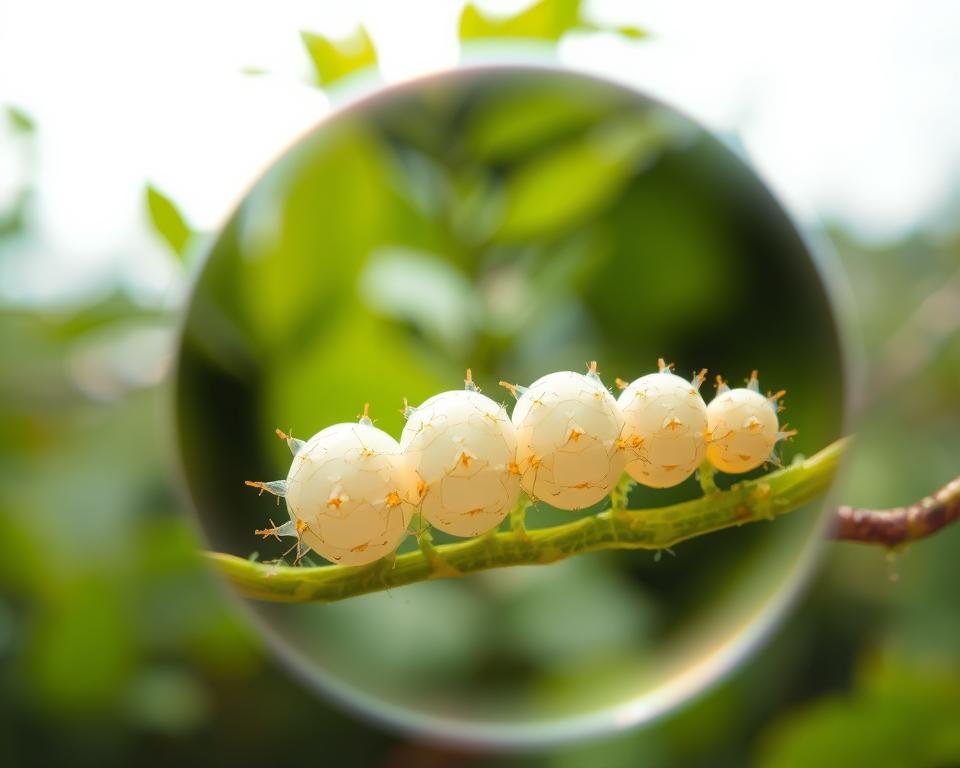
Silkworm eggs are small, oval, and slightly flattened. They have a smooth, glossy surface. Their color can change; they start as light yellow or pale gray and may darken.
These eggs are laid in clusters on a good surface. This helps the next generation survive.
- Size: Silkworm eggs are relatively small.
- Color: Initially light yellow or pale gray.
- Surface: Smooth and glossy.
Duration of the Egg Stage
The egg stage’s length depends on temperature and humidity. Usually, eggs hatch in 10 to 14 days when conditions are right. The environment greatly affects how long it takes, with warmer temperatures speeding it up.
- Optimal temperature for hatching.
- Humidity levels affecting egg viability.
- Duration ranging from 10 to 14 days.
By understanding the egg stage, we can see how complex silkworm development is. We learn about the factors that shape their life cycle.
The Larval Stage
The larval stage is a key part of a silkworm’s life. It’s when they grow and develop a lot. During this time, they are called larvae or caterpillars.
Description of Larvae
Silkworm larvae eat a lot and grow fast. They look different and love to eat mulberry leaves. These leaves are their main food.
Feeding Habits of Silkworm Larvae
The way silkworm larvae eat is important for their growth. They eat mulberry leaves all the time. This food helps them grow strong.
- The larvae go through several instars, shedding their skin as they outgrow it.
- Proper nutrition during this stage is vital for healthy development.
Duration of the Larval Stage
The larval stage lasts about 20-24 days. This depends on things like temperature, humidity, and food. Good conditions help larvae grow well and make better silk.
By making the larval stage better, farmers can make silk that is higher quality and more.
The Pupal Stage
The pupal stage is a key part of a silkworm’s life. It’s when the silkworm changes into an adult moth. This stage is full of important changes.
Transformation in the Cocoon
In the pupal stage, the silkworm goes through a dramatic transformation in its cocoon. The cocoon is made of silk threads. It protects the silkworm as it changes into a moth.
Inside the cocoon, the silkworm’s body changes a lot. Its organs and tissues are rearranged to form the adult moth. This is a complex process that involves breaking down and rebuilding different parts of the body.
This transformation is not just about the body changing. It’s also a time of big changes in how the silkworm uses energy. The silkworm uses its stored energy to prepare for its future role as an adult moth.
Duration and Characteristics of Pups
The pupal stage lasts about 2-3 weeks. This depends on things like temperature and humidity. During this time, the pupa stays mostly quiet in the cocoon.
The pupal stage is very important in the silkworm life span. It decides if the adult moth will be healthy. Things like the environment can affect how well the moth does.
Knowing about the pupal stage helps improve silk production. By controlling the environment, sericulturists can get better silk. This means more and better silk for everyone.
The Adult Moth
The lifecycle of the silkworm ends with the adult moth. This stage is key for the species to continue. The adult moth is important for reproduction, ensuring new silkworms.
After coming out of its cocoon, the adult moth’s main job is to mate and lay eggs. They can’t eat because they don’t have mouthparts. So, they survive on energy stored up when they were larvae.
Life of the Adult Moth
The adult moth lives for about 2 to 4 days. They spend this time looking for a mate and reproducing. Males are active flyers, searching for females.
Mating Behavior: Males find females by smelling their pheromones. This is key for them to pair up. After mating, the female starts laying eggs.
Mating and Egg-Laying Behavior
The female moth can lay 300 to 500 eggs. This number depends on the larva’s nutrition and the environment. The eggs are laid on a good surface for the next generation.
The table below summarizes key aspects of the adult moth stage:
| Characteristics | Description |
|---|---|
| Lifespan | 2 to 4 days |
| Egg-Laying Capacity | 300 to 500 eggs |
| Mating Behavior | Males detect female pheromones for mating |

Understanding the adult moth stage is key for better silk production and breeding. By improving the adult moth’s reproduction, sericulturists can increase silk yield and quality.
Environmental Factors Affecting Growth
It’s key to know how the environment affects silkworm growth for better sericulture. Silkworms are very sensitive to their surroundings. They need specific conditions to grow well through their silkworm stages.
Temperature and Humidity Requirements
Temperature and humidity are very important for silkworms. They need a temperature between 20°C to 30°C. Humidity should be between 60% to 80%.
Maintaining these conditions is vital for their health. If these conditions are not met, silkworms can get stressed. This stress can slow their growth and make them more prone to diseases.
Impact of Light on Development
Light also affects silkworms’ growth. Silkworms don’t need light for their metabolism. But, the amount of light they get can change their growth.
Some research shows that the right light can help silkworms grow better. It can also help in getting more cocoons. So, controlling light is important for better silkworm rearing.
Nutrition and Diet of Silkworms
Nutrition is key for silkworms, affecting their growth and health. As they grow, their diet must change to meet their needs at each stage.
Food Sources for Silkworms
Silkworms mainly eat mulberry leaves. These leaves are full of nutrients that help them grow. The quality and amount of leaves greatly affect their health and productivity.
Nutritional Content of Mulberry Leaves
| Nutrient | Content in Mulberry Leaves |
|---|---|
| Protein | 15-20% |
| Carbohydrates | 40-50% |
| Fiber | 10-15% |
| Vitamins and Minerals | Variable, includes Vitamin C, Potassium |
Nutritional Needs Across Lifecycle Stages
Silkworms need different nutrients at different stages. In the larval stage, they need lots of protein for fast growth. When they become pupae, they focus on storing energy for the adult stage.
In conclusion, knowing what silkworms need to eat is vital for their care. By giving them the right food at each stage, farmers can help their silkworms thrive.
Common Challenges in Silkworm Rearing
Exploring silkworm rearing reveals several challenges. Silkworms are very sensitive to their surroundings. Diseases, pests, and nutrition are key factors affecting their health and silk production.
Diseases and Pests
Silkworms face diseases like pébrine, flacherie, and grasserie. These can greatly reduce silk output. Without proper management, losses can be huge.
Diseases in silkworms come from bacteria, viruses, or fungi. For example, flacherie is often caused by bacteria. Grasserie is a viral infection. Keeping the environment clean, watching for health issues, and using disease-free eggs are key to managing diseases.
Pests like the dermestid beetle and ants are also a big problem. They can eat silkworms or their eggs. It’s important to control pests to avoid infestations.
Best Practices for Pest Management
Managing pests effectively requires a few strategies. Here are some tips:
- Keep the rearing area clean to prevent pests.
- Use disease-free eggs to lower disease risk.
- Regularly check silkworms for disease or pests.
- Use natural predators to control pests.
A good pest management plan can greatly improve silkworm health and silk production. Below is a table showing common pests, their effects, and how to control them:
| Pest | Impact | Control Measures |
|---|---|---|
| Dermestid Beetle | Feeds on silkworms and eggs | Cleanliness, traps |
| Ants | Feed on silkworm eggs and larvae | Seal entry points, use ant baits |
Understanding and tackling the challenges of silkworm rearing can lead to better health and productivity. This, in turn, boosts silk production.
The Role of Silkworms in Ecosystems
Silkworms are key players in ecosystems, boosting biodiversity and supporting food chains. They have a big impact on the environment, affecting many ecological processes.
Silkworms and Biodiversity
Silkworms add to biodiversity by being part of a complex network of species. They are food for many animals, from birds to insects. The mulberry leaves they eat also help other herbivores, making ecosystems diverse.
They also keep ecosystems in balance. Their eating habits shape plant communities, which affects other species that rely on those plants.
“The complex relationship between silkworms and their environment shows how ecosystems are connected.” –
Contribution to Food Chains
Silkworms are essential in food chains, linking plants to higher-level consumers. They are eaten by predators like birds, spiders, and other insects. This energy transfer moves up the food chain.
| Predator | Role in Ecosystem |
|---|---|
| Birds | Consume silkworms, controlling their populations and maintaining ecological balance. |
| Spiders | Prey on silkworms, contributing to the regulation of their numbers. |
| Other Insects | Some insects feed on silkworms, further integrating them into the food chain. |
The silkworm life span is important for understanding their role. Their life cycle, from egg to adult moth, affects their interaction with the environment and other species.
Innovations in Silkworm Farming
Silkworm farming is changing fast, thanks to new technologies and green practices. As we look at the silkworm’s life cycle, it’s clear that these changes can really help with silk making.
New Techniques and Technologies
New systems are being used to watch over and control silkworm environments. This includes keeping the temperature and humidity just right. These conditions are key for silkworms to grow well at each stage.
Genetic engineering is also making big strides. It helps farmers grow more silk and make it better. This involves tweaking the silkworm’s genes to get better results.
Sustainable Practices in Silk Production
Now, silkworm farming is focusing more on being green. Farmers are growing mulberry leaves organically. This is what silkworms eat and it’s better for them and the planet.
Using recycled materials for harvesting cocoons and building energy-saving houses are other green steps. These actions help make silkworm farming kinder to the environment.
| Innovation | Description | Impact |
|---|---|---|
| Automated Environmental Control | Systems that monitor and adjust temperature and humidity levels. | Improved health and development of silkworms. |
| Genetic Engineering | Enhancing genetic traits for better silk production. | Increased silk quality and quantity. |
| Organic Mulberry Cultivation | Cultivating mulberry leaves without chemical pesticides or fertilizers. | Healthier silkworm diet and reduced environmental impact. |
Conclusion: The Future of Silkworms
Learning about the silkworm life cycle and metamorphosis is key for better care and silk making. As the silk industry grows, keeping up with new trends and farming methods is vital.
Emerging Trends
The future of silkworms is bright, with new ways to make silk being discovered. There’s a big push for green silk farming, making the industry better for our planet.
Industrial Significance
Silkworms are essential for making high-quality silk fabrics. They’re not just for fashion; they help create new materials and technologies too.
We must keep researching and finding new ways to farm silkworms. This will help the silk industry stay strong and sustainable for years to come.