
Did you know that silk production dates back over 5,000 years? China is the biggest maker of this luxurious natural protein fiber. As I dive into the wide world of silk textiles variety, I’m eager to share the different silk material categories and their special traits.
Silk fabric is loved for its luxurious feel, durability, and flexibility. In this detailed guide, I’ll show you the various silk fabric types, their features, and uses. This will give you a better grasp of this diverse field.
Key Takeaways
- Understanding the different categories of silk materials
- Exploring the unique characteristics of various silk textiles
- Discovering the uses of different silk fabric types
- Learning about the history and production of silk
- Appreciating the luxury and versatility of silk fabric
What is Silk Fabric?
Silk has a long history and is very versatile. It has been loved for centuries. Today, it’s just as popular.
Overview of Silk
Silk comes from silkworms, mainly Bombyx mori. It’s known for its smooth feel, shine, and strength. Silk is used in many things, like fancy clothes and home decor.
Making silk is hard work. It involves raising silkworms and getting their cocoons. This makes silk special and valuable.
History of Silk Production
Silk started in ancient China. It was prized for its luxury. The Silk Road helped spread silk worldwide.
Over time, making silk has changed. But old ways are kept alive. This keeps silk’s cultural value alive.
Characteristics of Silk
Silk is strong, stretchy, and lets air through. These traits make it great for clothes and more. There are many types of silk, like Mulberry, Tussah, and Eri silk. Each has its own feel and use.
| Type of Silk | Characteristics | Uses |
|---|---|---|
| Mulberry Silk | Soft, fine texture, and luster | High-end clothing, luxury bedding |
| Tussah Silk | Coarser texture, and more textured appearance | Home decor, upholstery, and clothing |
| Eri Silk | Soft, warm, and wool-like texture | Winter clothing, scarves, and shawls |
Knowing about silk’s qualities and types is key. It shows why silk is so valuable. Whether for clothes or home decor, silk has something for everyone.
Common Types of Silk Fabrics
Exploring the world of silk fabrics shows many types, each unique. Knowing these differences helps pick the right silk for what you need.
Mulberry Silk
Mulberry silk is top-notch for its softness and strength. It comes from silkworms eating mulberry leaves. This makes it a favorite for its rich feel and look.
Key characteristics of Mulberry silk include:
- Soft and smooth texture
- High durability
- Luxurious appearance
Tussah Silk
Tussah silk, or wild silk, has a coarser feel than Mulberry silk. It comes from silkworms in the wild, eating different leaves. This gives it a unique, textured look.
Tussah silk is often used for:
- Rustic or textured fabrics
- Unique, natural designs
- Durable, long-lasting garments
Eri Silk
Eri silk, or Ahimsa silk, is harvested after the silkworm leaves its cocoon. This makes it a kinder, greener choice. It’s soft and wool-like, great for eco-friendly fabrics.
“Eri silk represents a more compassionate approach to silk production, aligning with the principles of sustainability and animal welfare.”
In summary, silk fabrics come in many forms. From Mulberry’s luxury to Tussah’s texture and Eri’s eco-friendliness. Knowing these differences helps choose the best silk for your needs.
How Silk is Made
Making silk is a detailed and hard process. It needs skill and care. From growing silkworms to weaving the silk, it’s a long journey.
The Sericulture Process
The first step is growing silkworms, mainly bombyx mori. They eat mulberry leaves. As they grow, they make cocoons of a single silk filament.
These cocoons are then soaked in hot water. This loosens the sericin, a sticky substance. It helps to separate the filament.
It’s a hard process that needs a lot of knowledge. Things like temperature and humidity matter a lot. Even the quality of the mulberry leaves is important.
Spinning and Weaving Techniques
After soaking, the filaments are spun into yarn. This yarn is then woven or knitted. The way it’s done affects the silk’s look and feel.
Spinning techniques can be old or new. The choice affects the yarn’s quality and the fabric’s features.
The weaving techniques also vary. This creates different silk fabrics, like charmeuse or georgette. Each has its own look and use.
Knowing how silk is made shows the skill behind it. It’s not just about the material. It’s about the craftsmanship that goes into it.
Popular Silk Weaves
Silk weaves range from luxurious charmeuse to crisp taffeta. They offer a wide variety for designers and consumers. These weaves are perfect for both high-end fashion and home decor.
Charmeuse Silk
Charmeuse silk is loved for its smooth, shiny surface. It’s a top choice for fancy clothes and lingerie. Its softness and luxurious feel make it a hit in haute couture.
Georgette Silk
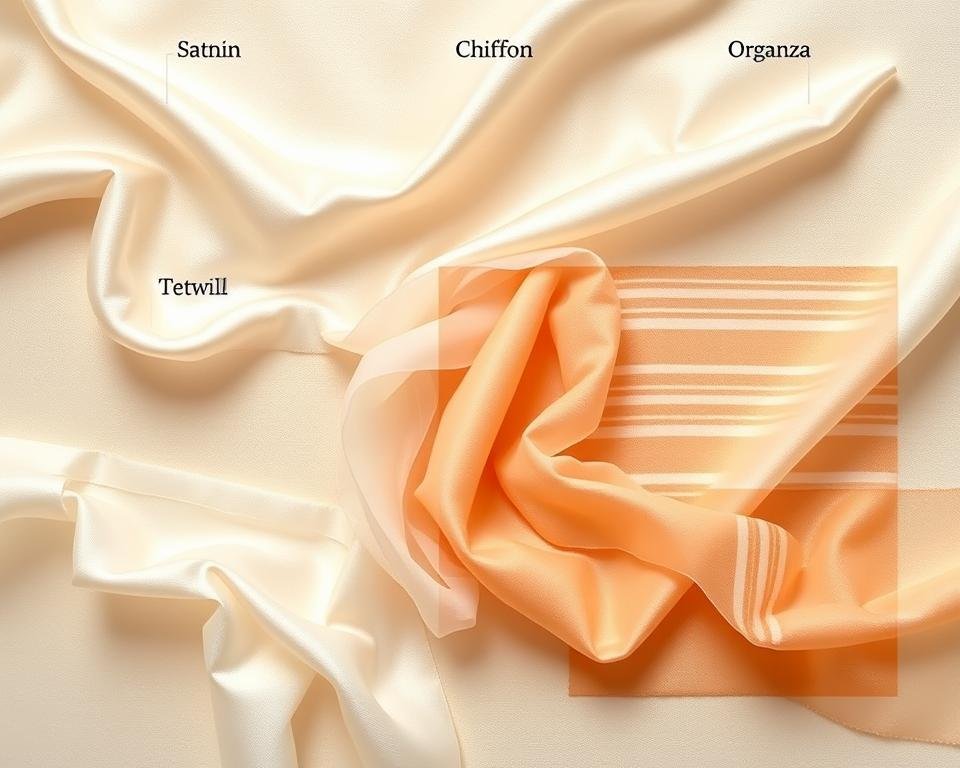
Georgette silk has a unique texture, unlike charmeuse. It’s crinkled, giving it a special look. Georgette is great for dresses and blouses that need to flow elegantly.
Taffeta Silk
Taffeta silk is known for its crisp, smooth feel. It’s perfect for formal wear and evening gowns. Its stiffness and shine are ideal for structured outfits.
| Silk Weave Type | Characteristics | Common Uses |
|---|---|---|
| Charmeuse | Smooth, lustrous surface | High-end clothing, lingerie |
| Georgette | Textured, crinkled surface | Dresses, blouses |
| Taffeta | Crisp, smooth texture | Formal wear, evening gowns |
Knowing the different types of silk weaves helps you pick the right fabric. Whether you’re a designer or a shopper, understanding these weaves is key.
Silk Fabric Uses and Applications
Silk is a favorite in many fields because of its softness and lasting quality. The variety of silk textiles available makes it a key player in fashion, home decor, and luxury bedding.
Silk stands out because it can be made into many silk material categories. This makes it perfect for a wide range of uses. In fashion, silk is loved for its luxury and strength, making it a top pick for high-end clothes and accessories.
Fashion Industry
The fashion world loves silk for its elegance and flexibility. Designers use it to make everything from elegant evening dresses to smart business outfits. The popular silk fabric types in fashion include charmeuse, georgette, and taffeta, each with its own special texture and flow.
Home Decor
Silk is also a big hit in home decor. Its softness and beautiful flow make it perfect for furniture, drapes, and more. Silk adds a touch of class to any room, making it a favorite for high-end interior designs.
Luxury Bedding
Silk bedding is known for its softness and breathability, making it great for a good night’s sleep. It also brings a luxurious feel to bedrooms, making it a top choice for those wanting to upgrade their sleep space.
In summary, silk fabric has many uses and is highly valued in various industries. Its softness, durability, and versatility make it a favorite in fashion, home decor, and luxury bedding.
Caring for Silk Fabrics
To keep your silk fabrics looking their best, it’s essential to follow proper care guidelines. Silk fabrics, with their various silk cloth variations, require a gentle touch to maintain their beauty and longevity.
When it comes to washing silk, it’s important to use cold water and a mild detergent. This prevents damage to the fibers. Hand washing is usually the safest method, as machine washing can be too harsh. Gently swish the silk around, then rinse thoroughly with cold water.
Washing and Drying Tips
For drying, gently blot excess water with a towel. Lay the silk fabric flat on a clean towel to air dry. Avoid wringing or twisting the fabric, as this can cause creases and damage. Direct sunlight should also be avoided, as it can cause fading.
Ironing and Storage Guidelines
Ironing silk while it’s slightly damp can help remove wrinkles. Use a low-temperature setting and a pressing cloth to prevent scorching. For storage, silk fabrics should be kept in a cool, dry place, away from direct sunlight. You can store them in breathable bags or wrap them in tissue paper to prevent creasing.
By following these care guidelines, you can enjoy your silk fabrics, including various silk material classifications, for years to come. Proper care not only maintains their appearance but also ensures their durability.
Buying Silk Fabrics: What to Look For
When you’re looking to buy silk fabrics, there are important things to think about. The quality of silk can change a lot based on its type, weave, and how it’s made.
Looking at silk fabrics means checking for certain quality signs. These include the fabric’s weight, texture, and weave. A top-quality silk will have a smooth texture and feel heavy.
Quality Indicators
Quality signs are key to knowing if a silk fabric is worth it and lasts long. Here are some important ones:
- Thread count: A higher thread count means a tighter weave and a stronger fabric.
- Weave type: Different weaves, like charmeuse or georgette, give different looks and feels.
- Material purity: Make sure the fabric is 100% silk or the silk blend it says it is.
Knowing these quality signs helps you choose better when buying silk fabrics.
Fabric Weight and Feel
The weight and feel of silk fabric are also key. Silk fabrics can be light and flowy or heavy and luxurious.
The weight you prefer depends on what you plan to use it for. For example, a light silk is great for summer dresses, while a heavy silk is better for winter coats.
Silk is loved for its smooth, shiny feel. A good silk should feel soft and have a bit of shine.
In short, when buying silk fabrics, think about quality signs, weight, and feel. This way, you’ll get a high-quality silk that fits your needs.
Silk Innovations and Trends
The silk industry is on the verge of a big change. This is thanks to new ways of making silk and advanced weaving methods. Now, there are more types of silk fabrics for people to choose from.
A big trend in silk is moving towards sustainable production. Sustainable silk production means being kinder to animals and the planet. For example, Ahimsa silk, or peace silk, is made without harming silkworms. This supports ethical silk-making.
Sustainable Silk Production
Sustainable silk is becoming more popular. It’s good for the environment and fair to animals. Emma F. Chapman, a textile expert, says it’s a positive step for the fashion world.
“The future of silk lies in its sustainability and the industry’s ability to innovate while maintaining ethical standards.”
Advanced Weaving Techniques
New weaving methods are also changing the silk world. Digital printing and jacquard weaving make it possible to create detailed designs. These techniques add beauty to silk fabrics and offer more choices for everyone.
The demand for eco-friendly and creative textiles is rising. The silk industry is ready to meet this need with more sustainable and innovative products. This ensures a bright future for silk lovers everywhere.
Conclusion: Embracing Silk in Your Wardrobe
Silk is a unique blend of luxury, durability, and versatility. Knowing the different silk fabric types helps you choose the right one for your wardrobe or home. This knowledge lets you make smart choices.
Luxury and Versatility
Charmeuse silk offers a smooth texture, while tussah silk has a rustic charm. There’s a silk fabric for everyone’s taste and need. You can find silk for elegant dresses, sophisticated accessories, and home decor.
Exploring Silk Further
This guide should inspire you to dive into the world of silk. Choosing silk boosts your style and adds durability and luxury. Now, you can pick the best silk for your clothes and home.