
Did you know sericulture, the art of breeding silkworms for silk, supports millions globally? This ancient craft has grown, with new sericulture methods boosting silk quality and quantity.
I’ll dive into the sericulture types and their traits, giving you a full guide. From old ways to new tech, this guide will show you sericulture’s key points. It aims to highlight its value and growth possibilities.
Key Takeaways
- Overview of sericulture and its significance
- Different sericulture methods and their advantages
- Characteristics of various sericulture types
- Importance of sericulture in the global economy
- Future prospects and innovations in sericulture
Introduction to Sericulture
Sericulture is the ancient art of breeding silkworms for silk. It has grown a lot over time. This practice is a big part of agriculture, helping local economies and supporting many farmers worldwide.
What is Sericulture?
Sericulture is about growing silkworms for their silk, a natural protein fiber. The process starts with silkworm rearing. This means feeding them mulberry leaves, keeping them healthy, and harvesting their cocoons for silk.
Importance of Sericulture in Agriculture
Sericulture is very important in agriculture. It helps farmers earn extra money, making their lives better. It also supports sustainable agricultural practices.
By mixing old traditions with new tech, sericulture stands out. It’s a mix of old ways and new ideas.
Overview of the Silk Production Process
The silk-making journey starts with silkworm breeding. Silkworm eggs hatch, and the young ones eat until they make cocoons. Then, the cocoons are picked, and the silk is pulled out.
This is done by soaking the cocoons in hot water to remove a sticky substance. Then, the silk is unwound onto a reel.
The silk’s quality depends on many things. This includes the silkworm breed, their food, and where they live. Knowing these helps make better silk.
Types of Sericulture
Sericulture is split into two main types. These are based on the silkworm species and their host plants. Knowing these categories helps us understand the sericulture industry better.
Mulberry Sericulture
Mulberry sericulture uses silkworms that eat mulberry leaves. It’s the most common type of sericulture worldwide.
The Bombyx mori silkworm is key in mulberry sericulture. It’s chosen for its high silk yield and ability to thrive in various environments.
Non-Mulberry Sericulture
Non-mulberry sericulture deals with silkworms that don’t eat mulberry leaves. These silkworms live on plants like oak, castor, or tapioca.
This type of sericulture makes different silks, like tasar, eri, and muga silk. Each has its own special features and ways of being made.
| Characteristics | Mulberry Sericulture | Non-Mulberry Sericulture |
|---|---|---|
| Silkworm Species | Bombyx mori | Various species like Antheraea, Samia, etc. |
| Host Plants | Mulberry | Oak, Castor, Tapioca, etc. |
| Types of Silk | Mulberry silk | Tasar, Eri, Muga silk |
Definitions and Differences
Understanding sericulture requires knowing its definitions and differences. Sericulture is about growing silkworms for silk. But, the ways to do this can be quite different.
Sericulture techniques cover many steps, from raising silkworms to getting silk. The silk’s quality depends a lot on these methods. These can be divided into mulberry and non-mulberry sericulture. Mulberry sericulture uses mulberry leaves for silkworms, making a certain type of silk.
Non-mulberry sericulture feeds silkworms other leaves, making different silks. Knowing these differences is key for farmers, producers, and buyers. It impacts the silk’s quality, feel, and price.
Exploring sericulture practices shows the depth and history of this field. Both mulberry and non-mulberry sericulture have their own traits and hurdles.
Mulberry Sericulture
Mulberry sericulture is unique among sericulture methods. It has been perfected over centuries. It focuses on raising mulberry silkworms for high-quality silk.
Characteristics of Mulberry Silk
Mulberry silk is known for its fine texture and durable quality. It is soft and shiny. It also keeps you warm, making it great for clothes in any weather.
The way mulberry silk is made is special. Silkworms are raised on mulberry leaves. This makes the silk unique. The silk’s quality depends on the silkworms’ diet and health.
Key Players in Mulberry Sericulture
China, India, and Italy lead in mulberry silk production. They have advanced sericulture and a long history of silk making. They play a big role in the global silk market.
But, other places are also becoming big players. Mulberry sericulture is important worldwide. It shows how global trade affects silk production.
Farming Techniques and Practices
Farming for mulberry sericulture involves many practices. These aim to keep silkworms healthy and silk production high. This includes growing mulberry plants and managing diseases.
Rearing silkworms is key. Farmers use different methods to keep them healthy. They make sure the silkworms grow well and stay healthy.
| Farming Practice | Description | Benefit |
|---|---|---|
| Mulberry Cultivation | Growing mulberry plants for silkworm feed | High-quality feed for silkworms |
| Disease Management | Monitoring and controlling diseases among silkworms | Reduced risk of disease outbreaks |
| Cocoon Harvesting | Harvesting cocoons at the optimal stage | Improved silk quality |
Non-Mulberry Sericulture
Non-mulberry sericulture is a world of its own, with many silkworm species and ways to produce silk. It’s different from mulberry sericulture and brings its own set of benefits and challenges.
Types of Non-Mulberry Silkworms
Non-mulberry sericulture uses silkworms like Antheraea assamensis, known as the Muga silkworm, and Philosamia ricini, or the Eri silkworm. These silkworms eat different plants, which makes their silk special.
Regions Known for Non-Mulberry Sericulture
Many places around the world practice non-mulberry sericulture. India and China are big players in this field. They have the right climate and plants for these silkworms.
Key regions include:
- Northeast India, known for Muga silk production
- China, a significant producer of non-mulberry silk varieties
Economic Importance of Non-Mulberry Silk
Non-mulberry silk, like Muga and Eri silk, is very valuable. It’s known for its unique feel and strength. Making this silk helps many rural communities financially.
The demand for non-mulberry silk is growing. People want sustainable and unique fabrics. So, non-mulberry sericulture is becoming more important worldwide.
Comparative Analysis of Sericulture Types
Different types of sericulture have their own strengths and weaknesses. Sericulture practices vary widely. Understanding these differences is key to appreciating the complexity of silk production.
The two main types of sericulture are mulberry and non-mulberry sericulture. Each has its unique characteristics, advantages, and challenges. I will compare these types based on the quality and texture of the silk produced, yield and production rates, and market demand.
Quality and Texture Comparison
The quality and texture of silk are influenced by the type of sericulture practiced. Mulberry silk is known for its fine texture and uniformity. It is highly prized in the textile industry. On the other hand, non-mulberry silk, such as tasar and eri silk, has a coarser texture but is valued for its durability and unique patterns.
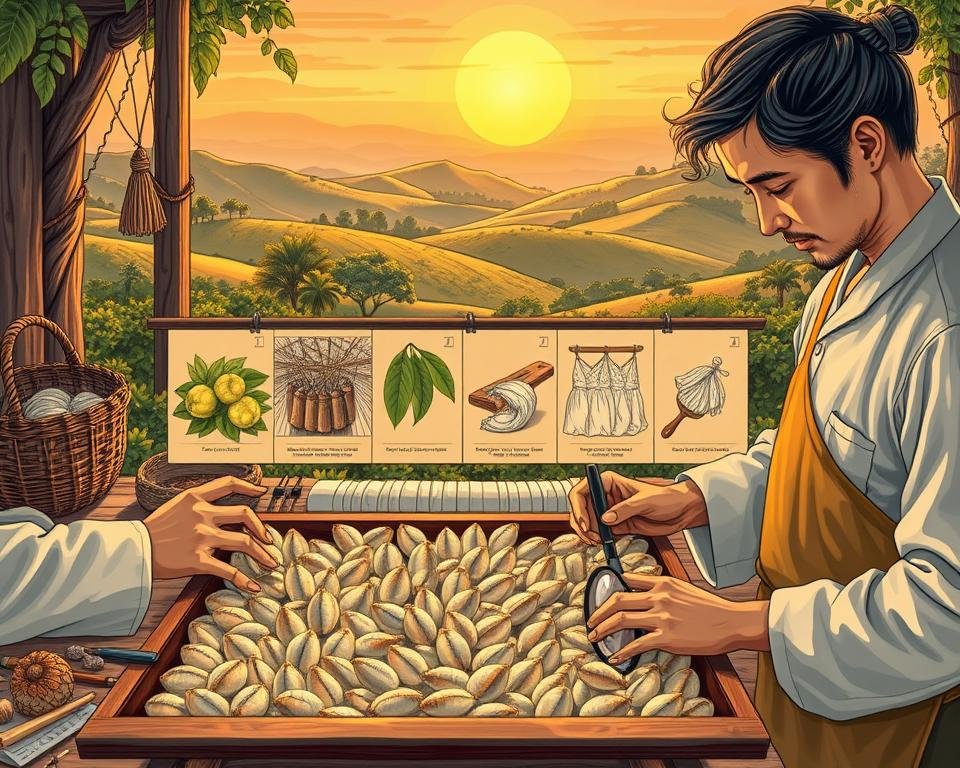
The difference in quality and texture is largely due to the different species of silkworms used and the feeding practices. Mulberry silkworms feed exclusively on mulberry leaves, resulting in a finer silk. Non-mulberry silkworms feed on a variety of leaves, producing a coarser but more resilient silk.
Yield and Production Rates
Yield and production rates are critical factors in determining the economic viability of sericulture practices. Mulberry sericulture generally has higher yield and production rates compared to non-mulberry sericulture. This is because mulberry silkworms are more widely cultivated and have been bred for higher productivity.
| Type of Sericulture | Average Yield per Cocoon (kg) | Production Rate (tons per year) |
|---|---|---|
| Mulberry Sericulture | 0.8-1.2 | 1000-1500 |
| Non-Mulberry Sericulture | 0.4-0.8 | 500-800 |
Market Demand and Usage
Market demand for silk is influenced by consumer preferences, cultural traditions, and the availability of different types of silk. Mulberry silk is in high demand globally due to its luxurious feel and appearance. In contrast, non-mulberry silk has a niche market, mainly in regions where it is traditionally produced and consumed.
The usage of silk also varies based on its type. Mulberry silk is often used in high-end fashion and textiles. Non-mulberry silk is used in a variety of applications, including traditional clothing and home furnishings.
Sericulture Practices Around the World
The art of sericulture varies globally, shaped by culture and environment. This has led to unique sericulture techniques and sericulture methods in different places. These practices add to the richness of this ancient craft.
Sericulture is more than just silk making. It’s a key part of agriculture and culture in many countries. The variety in sericulture shows the creativity and adaptability of sericulturists everywhere.
Asia’s Role in Global Sericulture
Asia has been at the heart of sericulture for ages. Countries like China, India, and Japan lead in silk production. They’ve developed special sericulture techniques for their local settings.
“Sericulture is not just an occupation, it’s a way of life in many Asian communities, passed down through generations.”
In China, mulberry sericulture is the main focus, with advanced methods to boost silk production. India, by contrast, excels in non-mulberry sericulture, producing top-notch silk through new sericulture methods.
| Country | Primary Sericulture Type | Notable Techniques |
|---|---|---|
| China | Mulberry Sericulture | Advanced mulberry cultivation, automated reeling |
| India | Non-Mulberry Sericulture | Tasar silk production, eco-friendly practices |
| Japan | Mulberry Sericulture | High-tech sericulture, precision farming |
Innovations in American Sericulture
In the U.S., sericulture is becoming a sustainable farming practice. American sericulturists are mixing modern tech with traditional sericulture techniques.
They’re using automated systems to check silkworm health and the environment. This boosts efficiency and silk quality.
The future of sericulture in America looks bright. There’s ongoing research to better sericulture methods and increase silk production.
As demand for sustainable, quality silk grows, American sericulture innovations will impact the global market.
Future Trends in Sericulture
The sericulture industry is on the verge of a big change. We’re seeing a move towards sustainable and innovative practices. Technology will be key in shaping sericulture’s future.
Genetic engineering and biotechnology are becoming important. They help improve silkworm breeds and make silk production more efficient. This means better quality and more silk, making sericulture more competitive worldwide.
There’s also a big push for sustainable practices. As people care more about the environment, farmers are using eco-friendly methods. They’re using organic feed for silkworms and growing mulberry trees in sustainable ways.
| Trend | Description | Impact |
|---|---|---|
| Technological Advancements | Adoption of genetic engineering and biotechnology | Improved silk quality and increased production efficiency |
| Sustainable Practices | Use of organic feed and eco-friendly mulberry cultivation | Reduced environmental footprint and enhanced brand reputation |
| Innovative Farming Techniques | Integration of precision agriculture and automation | Increased productivity and reduced labor costs |
The sericulture industry is growing and changing. It’s important for farmers and everyone involved to keep up with new trends and tech. By doing this, the industry can look forward to a sustainable and successful future.
Challenges in Sericulture
Sericulture processes are complex and face many challenges. These include environmental factors and economic issues that need careful thought.
Environmental Factors Affecting Sericulture
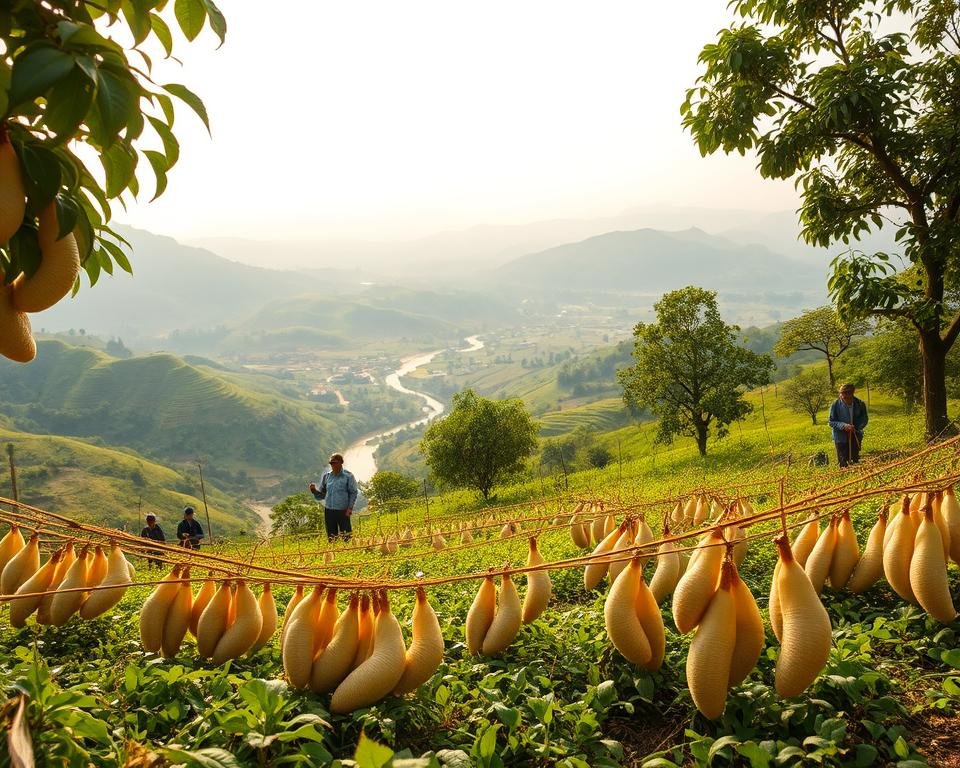
Sericulture relies a lot on the environment. Climate change is a big problem, affecting the quality and amount of mulberry leaves. These leaves are key for silkworms to eat.
The weather changes cause unpredictable temperatures and rainfall. This hurts the health and work of silkworms. Also, diseases in silkworms, caused by environmental stress, make sericulture harder.
Economic Challenges Faced by Farmers
Economic issues are a big problem in sericulture. Keeping sericulture farms running is expensive. This includes buying good silkworm eggs and taking care of mulberry plants.
The fluctuating market prices for silk also make it hard for farmers. It’s hard for them to know how much money they’ll make. This makes it tough for them to live off sericulture alone.
Solutions to Overcome Challenges
To solve these problems, using sustainable sericulture practices is key. This means growing mulberry plants in ways that can handle the weather. It also means using methods to fight pests without chemicals.
Also, giving training and financial help to sericulture farmers is important. This helps them deal with money issues and makes their work and income more stable.
- Promoting the use of high-quality silkworm breeds.
- Encouraging the adoption of modern sericulture technologies.
- Developing market linkages to ensure better prices for silk producers.
Benefits of Sericulture
Sericulture is more than just making silk. It has big impacts on the economy, environment, and culture. Let’s look at the many benefits it offers.
Economic Advantages for Farmers
One key benefit of sericulture is it helps farmers financially. It lets them make money from different sources, not just one crop. This makes them more stable against price changes.
Also, sericulture can be very profitable, thanks to sustainable methods. These methods improve silk quality. The world wants more high-quality silk, making sericulture a good choice for farmers.
Environmental Benefits of Sustainable Practices
Sustainable sericulture is good for the environment and silk quality. It uses eco-friendly ways to farm. For example, growing mulberry trees helps keep the soil healthy and boosts biodiversity.
It also uses resources wisely, cutting down on waste and chemicals. This is better for the planet and makes ecosystems healthier.
Cultural Significance of Sericulture
Sericulture is also deeply rooted in culture. It’s a tradition passed down through generations. It keeps cultural identity and community strong.
It also helps rural areas by creating jobs and supporting local skills. By keeping sericulture alive, communities can hold onto their heritage while using new, green methods.
The Future of Sericulture
New technologies are changing the sericulture industry. They make silk production better and more sustainable. Innovation is key to the industry’s future.
Innovations in Silk Production
New tech is changing how silk is made. Automated silkworm rearing systems make production more efficient and cut costs. Genetic research is also underway to create stronger silkworms that produce better silk.
A study in a top entomology journal shows these efforts are paying off. It found that new silkworm breeds can improve silk quality and yield (source).
The Role of Sustainable Practices
Sustainable practices are vital in sericulture to lessen environmental harm. Eco-friendly sericulture practices protect biodiversity and help farmers. Sustainable methods make sericulture better for the planet.
For example, organic mulberry cultivation and integrated pest management are steps towards sustainability. These practices also lead to better silk quality and more demand for eco-friendly products. As people care more about the environment, the need for sustainable silk will rise.
Changing Consumer Preferences
As people become more aware of what they buy, sericulture is changing. The need for green and eco-friendly items is pushing silk production and marketing in new directions.
Today, buyers want products that are top-notch and made responsibly. This shift is changing sericulture around the world. Producers are adjusting to these new needs.
Consumer tastes are also shaping sustainable silk production. Now, producers are using eco-friendly sericulture practices. These methods cut down on environmental harm while keeping silk quality high.
The table below shows how sericulture is evolving due to consumer preferences:
| Aspect | Traditional Practices | Modern Practices |
|---|---|---|
| Silkworm Rearing | Old methods with less care for the environment | New eco-friendly ways with less harm to nature |
| Silk Production | More focus on quantity than quality and greenness | Now, quality and sustainable methods are key |
| Marketing | Old-school marketing ways | New digital marketing that highlights green and eco-friendly aspects |
By moving to these new methods, sericulture farmers and producers can meet today’s consumer demands. They also help make the industry more sustainable and eco-aware.
The future of sericulture is bright. It will keep growing and adapting to what consumers want. This ensures a green and successful industry for many years.
Conclusion: Embracing Sericulture Growth
Sericulture is on the rise, showing great promise. It offers new chances for farmers and producers. This growth isn’t just about making more. It’s also about doing it in a way that’s good for the planet and local people.
New Opportunities for Farmers
I think new farmers should look into sericulture. It can be a good and profitable choice. With the right training, it can help farmers earn a steady income and boost the local economy.
By using new methods, farmers can grow more and better silk. This makes their products stand out in the world market.
Education and Research: The Key to Success
The success of sericulture relies on education and research. Keeping up with new techniques and best practices is key. I believe investing in these areas is vital for sericulture’s growth and long-term success.