
Did you know over 100,000 metric tons of silk are made every year? This shows how important sericulture is. It’s an ancient art that has evolved over time. Let’s dive into the world of silk production methods and explore its secrets.
By using sericulture techniques, we can fully tap into silk’s possibilities. We’ll look at everything from silkworms to new ideas in the industry. Join me on this exciting journey through sericulture.
Key Takeaways
- Understanding the life cycle of silkworms is key for making silk.
- New techniques in sericulture are making silk better.
- Sericulture technology is essential for meeting global silk needs.
- The process involves breeding silkworms for their silk.
- Sericulture has been a cherished tradition for centuries.
What is Sericulture Technology?
Sericulture technology is about how we breed silkworms for silk. It includes the history and current ways of doing this.
Definition and Overview
Sericulture is about growing silkworms, mainly Bombyx mori, for their silk. It involves growing mulberry trees, raising silkworms, and picking cocoons. Today, we use new tech to make more and better silk.
Modern silk farming uses better breeding and disease control. This makes farming more productive.
History of Sericulture
Sericulture has been around for thousands of years. It started in ancient China and spread to Asia and the world. It has seen many important changes, like new farming methods and the growth of silk industries.
| Period | Significant Events in Sericulture |
|---|---|
| Ancient China (2640 BCE) | Legendary start of sericulture with the Empress Hsi-Ling-Chi |
| 6th century CE | Sericulture spreads to Korea and Japan |
| 12th century CE | Introduction of sericulture to Europe |
| 20th century CE | Adoption of modern technologies in sericulture practices |
The tech behind sericulture has grown a lot. It’s thanks to genetic research, disease management, and sustainable practices. Today, sericulture is key in the global textile world. It helps many people work and earn a living.
The Life Cycle of Silkworms
Silkworms undergo a remarkable transformation. Understanding their life cycle is key for those in sericulture. Their journey from egg to cocoon is complex and fascinating.
Stages of Silkworm Development
The life of a silkworm is divided into four stages: egg, larva, pupa, and adult. The egg stage starts with the eggs incubating until they hatch into larvae.
The larval stage is the most important. Here, silkworms eat mulberry leaves and grow. They molt several times as they outgrow their skin.
Feeding Habits and Nutrition
Silkworms eat a lot, mainly mulberry leaves. Mulberry cultivation is vital for sericulture. The quality and quantity of mulberry leaves affect silkworm health and productivity.
A balanced diet is vital for silkworm growth and development. Sericulturists must ensure silkworms get enough nutrition for high-quality silk.
- Mulberry leaves provide the necessary nutrients for silkworm growth.
- A balanced diet is essential for healthy silkworm development.
- Sericulturists must monitor the quality of mulberry leaves to ensure optimal silkworm health.
Types of Silkworms Used in Sericulture
Sericulture involves raising different silkworm species, each with its own traits. The type of silkworm used affects the silk’s quality and amount. We’ll look at the most common silkworms used in sericulture.
Bombyx mori
Bombyx mori, or the domestic silkworm, is the most used in sericulture. It’s known for high silk production and is key in commercial silk making. Bombyx mori has been bred for traits like high silk yield and disease resistance over centuries.
For more info on silkworm types, including Bombyx mori, check out this resource.
| Characteristics | Description |
|---|---|
| Silk Production | High yield, making it ideal for commercial sericulture |
| Disease Resistance | Bred for resistance to various diseases |
| Domestication | Well adapted to domestication, making it easy to rear |
Wild Silkworms
Wild silkworms, unlike Bombyx mori, are not as commonly raised but are valued for their unique silk. Wild silkworms, like those from the genus Antheraea, produce coarser, more textured silk. They are found in their natural habitats and are harvested for their silk.
Sustainable sericulture practices also include conserving their natural habitats. This makes sericulture more eco-friendly and ensures silk production’s long-term success.
The variety of silkworm species in sericulture shows the field’s innovation. From Bombyx mori to wild silkworms, each has its own benefits and challenges. As sericulture evolves, understanding and using these differences will be vital for sustainable practices.
The Importance of Silkworm Rearing
Rearing silkworms is key to making silk. It’s a big part of the sericulture industry. It needs a lot of care and knowing what silkworms need.
Good silkworm rearing means using the best sericulture techniques. This helps silkworms grow well. It also makes silk better and more plentiful, helping the whole silk-making process.
Rearing Methods
There are many ways to rear silkworms, each with its own good and bad points. Some common ones are:
- Disinfecting the rearing area to stop diseases
- Keeping the right temperature and humidity
- Feeding them a good diet
- Watching their health and catching diseases early
Using these silk farming practices helps create the best place for silkworms to grow.

Environmental Requirements
Silkworms need certain things to grow well. These include:
| Environmental Factor | Optimal Condition |
|---|---|
| Temperature | Between 20-30°C |
| Humidity | Between 60-80% |
| Light | Adequate light, but not direct sunlight |
Knowing and meeting these needs helps sericulturists. It makes silkworms healthy and improves silk production.
Innovations in Sericulture Technology
Sericulture technology is changing fast, thanks to new genetics and a push for sustainability. These changes are key for the industry’s future and meeting the demand for silk.
Genetic Advances
Genetic research has been key in bettering silkworm breeds. It has made them more resistant to diseases and better at producing silk. Scientists are now working on silkworms that can handle environmental stresses and diseases better, aiming to cut down on crop losses.
Genetic research is also looking into silkworms that need less food and grow faster. By understanding silkworm genetics, researchers can breed better varieties. These varieties will be more efficient at making silk, boosting productivity.
Sustainable Practices
Sustainability is now a big deal in sericulture, aiming to lessen the environmental impact of silk making. Practices include organic feed for silkworms, eco-friendly cocoon harvesting, and energy-saving reeling processes.
Some farms are using integrated pest management (IPM) techniques. This method manages pests and diseases in a holistic way. It reduces environmental harm and improves silk quality.
There’s also a move towards renewable energy in sericulture, like solar power for reeling and drying. This change cuts down on carbon emissions and lowers costs.
The Silk Production Process
The journey from silkworm cocoon to luxurious silk fabric involves several steps. I’ll guide you through the techniques used in cocoon harvesting and silk reeling. These sericulture techniques make it all possible.
Cocoon Harvesting
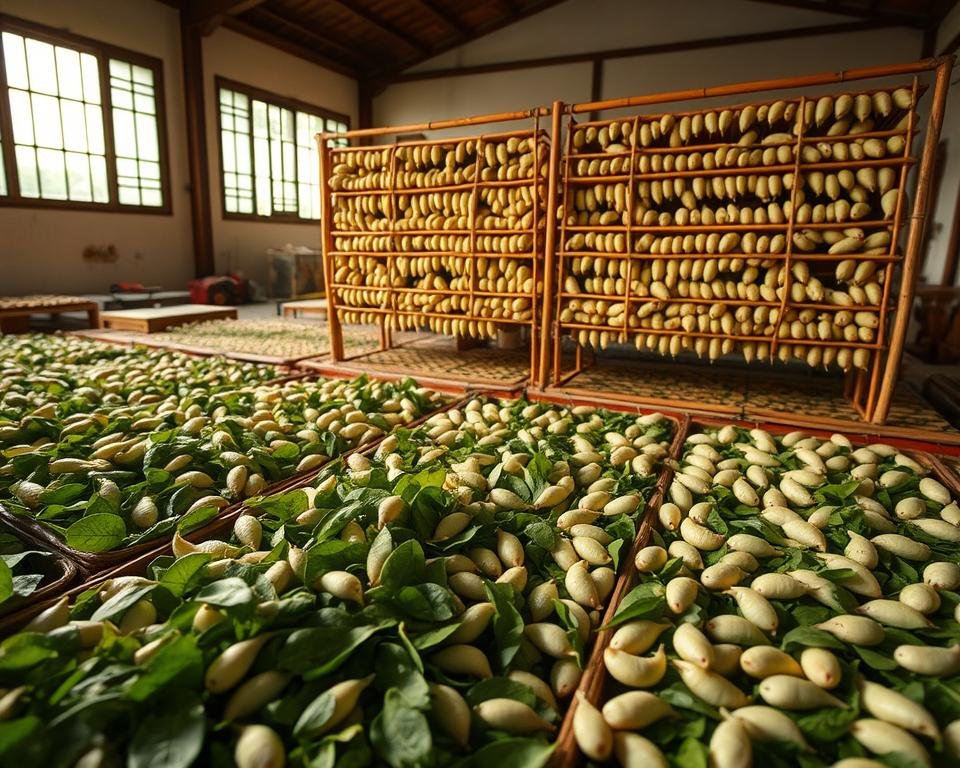
Cocoon harvesting is a key step in silk production. It’s important to collect the cocoons at the right time. Proper cocoon harvesting techniques are essential for quality silk.
The cocoons are gently collected from trays or baskets. They’re then sorted by quality and size. Damaged cocoons are removed from the production line.
Silk Reeling Techniques
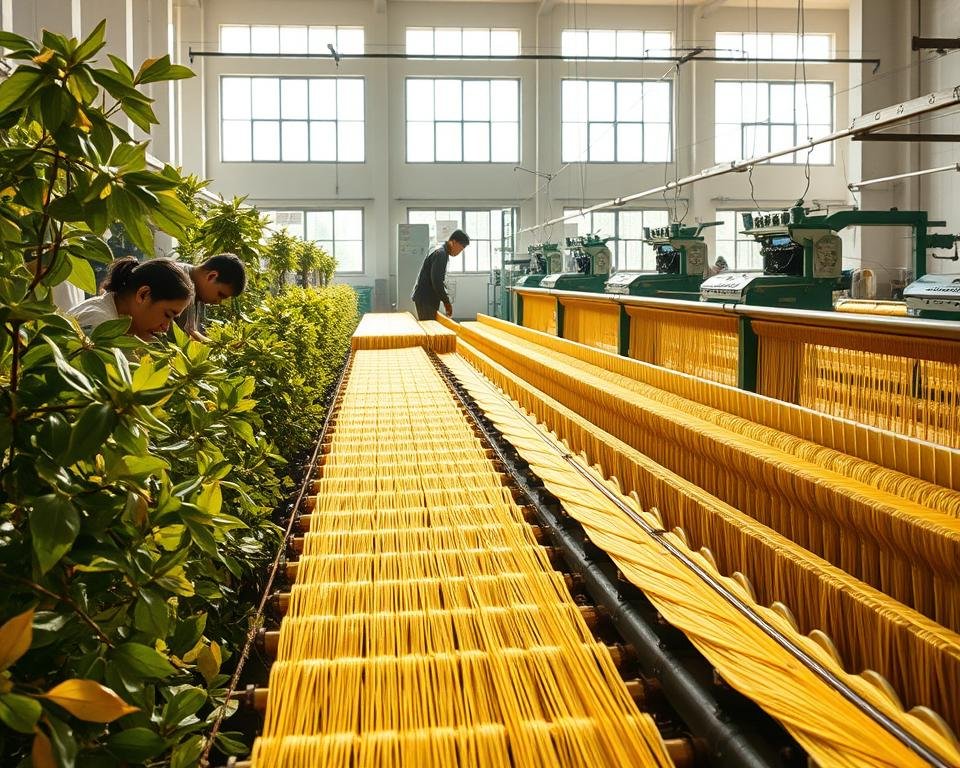
Silk reeling unwinds the silk filaments from cocoons. This is done with a machine called a silk reel. Efficient silk reeling techniques are key for smooth yarn.
The reeling process includes several steps:
- Cocoon preparation: Softening the cocoons in hot water to loosen the sericin.
- Reeling: Unwinding the silk filament and winding it onto a reel.
- Twisting: Twisting multiple filaments together to create a single yarn.
By mastering these sericulture techniques, silk producers can create high-quality silk. This meets the demands of the global market.
Economic Impact of Sericulture
Sericulture offers jobs in rural areas, making it a key part of rural development. It uses sericulture technology to create jobs where they are scarce. This helps keep rural communities economically stable.
Job Creation in Rural Areas
Sericulture needs a lot of labor, from raising silkworms to making silk. This makes it perfect for rural areas, where it can hire a lot of people. The Food and Agriculture Organization says sericulture employs millions, mostly in rural Asia and developing countries.
“Sericulture is a vital source of income for rural households, making them economically better off.” It also creates jobs in other areas like equipment sales and marketing. This boosts the local economy even more.
Global Silk Market Trends
The global silk market changes due to many factors. These include what people want, how much it costs to make, and trade rules. Now, there’s a big push for green and eco-friendly products, which helps the silk industry.
As people care more about the planet, they want more silk and sericulture products. This chance for growth could help sericulture play a bigger role in rural economies.
New tech in sericulture and silk making also helps the industry. Better genetics and green practices make it more productive and less harmful to the environment. This makes sericulture more appealing to farmers and investors.
Health Benefits of Silk
Silk is not just beautiful; it’s also good for your health. It comes from silkworms raised in mulberry fields. These worms make silk that’s full of health benefits.
Skin Properties
Silk is soft and doesn’t cause allergies. It’s perfect for people with sensitive skin. Silk helps keep your skin moist and at the right temperature.
How silkworms are raised affects the silk’s quality. Mulberry-fed worms make silk that’s extra soft and good for your skin.
Use in Medical Applications
Silk is safe for medical use because it’s non-toxic. It’s used in bandages to help wounds heal faster and leave less scar. Silk also fights off germs, which is great for keeping infections away.
Because silk lasts a long time, it’s also used in surgeries. Scientists are always finding new ways to use silk in medicine.
In short, silk is great for your skin and for medical treatments. As we learn more about raising silkworms and growing mulberries, we’ll find even more ways to use silk.
Challenges Facing Sericulture Technology
As sericulture technology grows, it faces big challenges like climate change and disease management. The sericulture world is very sensitive to the environment. It’s key to understand these issues to make sustainable sericulture practices.
Climate Change Effects
Climate change is a big threat to sericulture. It messes with the balance between silkworms, their food (mulberry leaves), and their living conditions. Rising temperatures and changing weather can cause:
- Lower quality and less mulberry leaves
- Stressed silkworms that get sick easier
- Changes in the traditional sericulture schedule, hurting cocoon and silk making
To fight these problems, scientists are looking into sericulture innovations. They’re working on mulberry varieties that can handle the weather and better silkworm breeding. For example, a study in India showed:
| Region | Temperature Increase | Impact on Cocoon Yield |
|---|---|---|
| North India | 1.5°C | -10% |
| South India | 2.0°C | -15% |
Dr. K. S. Kumar, a sericulture expert, says, “Climate change is a huge challenge for sericulture. We must use sustainable sericulture practices to keep this industry alive.”
Disease Management
Disease management is a big challenge in sericulture. Silkworms can get sick from bacteria and fungi. We need good ways to keep them healthy.
Some ways to fight diseases in silkworms include:
- Better cleaning in rearing houses
- Using silkworm breeds that resist disease
- Creating integrated pest management (IPM) plans
By using these methods and keeping innovating, the sericulture industry can beat the challenges of climate change and disease. This will help keep sericulture alive for the future.
Future Trends in Sericulture Technology
The sericulture industry is on the verge of a big change. This change comes from new technology and a focus on being green. As we look ahead, sericulture technology will be key in making silk production better.
Advancements in Automation
Automation is changing the sericulture world. New silk reeling machines and IoT systems are making things more efficient. They also cut down on labor costs. This means producers can make more high-quality silk to meet demand.
Eco-Friendly Practices
Going green is now a big deal in sericulture. There’s a push for organic silk, using the circular economy, and managing water better. These steps help reduce harm to the environment while keeping silk quality high.
As the industry keeps growing, sericulture technology will lead the way. It will drive progress and help the environment in the future.