
The textile industry is changing fast, thanks to a growing need for eco-friendly materials. Sustainable silk is becoming more popular because it’s made in a way that’s kinder to the planet.
I’m excited to tell you about this amazing fabric. Natural silk is special because of how it’s made. It’s a favorite among people who care about the environment.
Designers in the fashion world are starting to use cultivated silk more. This is because more people are thinking about how their choices affect the planet. So, the need for sustainable fabrics is going up.
Key Takeaways
- Eco-friendly production process reduces environmental impact
- Growing demand for sustainable textiles in the fashion industry
- Cultivated silk is a luxurious and environmentally conscious choice
- Increasing popularity among designers and consumers alike
- A significant transformation in the textile industry
What is Cultivated Silk?
Sericulture is the art of breeding silkworms for silk. It’s an ancient practice. Silkworms are raised, their cocoons harvested, and the silk fibers extracted.
The Process of Silk Production
Silk production starts with breeding silkworms. They eat mulberry leaves until they’re ready to spin cocoons. Then, the cocoons are harvested and soaked to loosen the sericin.
The silk filament is unwound from the cocoon, a process called reeling. One cocoon can yield up to 1,000 meters of silk. The filaments are twisted together to make a single thread of silk.
| Stage | Description | Key Activity |
|---|---|---|
| 1 | Breeding Silkworms | Feeding silkworms mulberry leaves |
| 2 | Cocoon Harvesting | Collecting cocoons before silkworm emergence |
| 3 | Reeling | Unwinding silk filaments from cocoons |
| 4 | Twisting | Twisting filaments into silk threads |
Differences Between Cultivated and Wild Silk
Cultivated silk is different from wild silk in many ways. Cultivated silk is obtained without harming the silkworm. This makes it more consistent and of higher quality.
Cultivated silk is soft, durable, and hypoallergenic. It’s often used in luxury textiles. On the other hand, wild silk is more textured and irregular. It’s used for unique, rustic fabrics.
The History of Cultivated Silk
The story of cultivated silk is filled with innovation, tradition, and cultural exchange. As I dive into its history, I’m amazed by its rich heritage. It has greatly influenced cultures worldwide.
Origins in Ancient China
Silk’s journey began in ancient China, where sericulture started around the 3rd millennium BCE. The Chinese kept silk production secrets, adding to its allure and value. Mulberry silk was highly valued for its softness and shine.

Evolution of Silk Production Techniques
Over time, silk-making techniques have greatly improved. As trade routes grew, sericulture spread to Asia and beyond. New farming and silk cultivation methods raised silk quality and quantity.
Today, the silk industry keeps up with new demands and environmental issues. The evolution of silk production has been shaped by technology and changing tastes. Mulberry silk remains a top choice for its unmatched quality.
Environmental Benefits of Cultivated Silk
Cultivated silk production is leading the way in eco-friendly textile making. As more people look for sustainable luxury, the perks of cultivated silk are clear.
Eco-Friendly Farming Practices
The way silk is grown focuses on eco-friendly farming practices. It cares for the soil, supports biodiversity, and uses water wisely. Silk worm farming, for example, avoids harmful chemicals and pesticides.
This green approach helps silk makers reduce their environmental impact. It also leads to better quality silk. This is good for the planet and for the silk itself.
Reduced Carbon Footprint
Silk worm farming has a smaller carbon footprint than making synthetic fabrics. It needs less energy and makes fewer emissions.
As people care more about the planet, they want sustainable silk. Choosing cultivated silk helps them do their part for the environment.
Advantages of Using Cultivated Silk
Cultivated silk is known for its softness and hypoallergenic qualities. It’s a natural protein fiber that offers comfort, durability, and health benefits. These qualities make it perfect for many uses.
Softness and Durability
The softness of cultivated silk is a big plus. It’s gentle on the skin, ideal for clothes that need to feel comfortable. Plus, cultivated silk is durable. It stays soft and keeps its shape even after many washes and wears.
| Property | Cultivated Silk | Synthetic Fabric |
|---|---|---|
| Softness | High | Variable |
| Durability | High | Variable |
| Hypoallergenic | Yes | No |
Hypoallergenic Properties
Cultivated silk is also hypoallergenic. It fights dust mites, mold, and mildew, great for those with sensitive skin or allergies. Its natural ability to regulate temperature adds to its comfort, keeping you cool in summer and warm in winter.
In short, cultivated silk offers many benefits. Its softness, durability, and hypoallergenic qualities make it a top choice for clothes and home textiles.
Cultivated Silk vs. Synthetic Fabrics
More people are choosing eco-friendly options, like cultivated silk over synthetic fabrics. Synthetic fabrics harm the environment from start to finish.
Cultivated silk, made through eco-friendly farming, has a much smaller environmental impact. It’s produced through sericulture, where silkworms are raised for their silk. This method is green and helps nature.
Comparison of Sustainability
Looking at sustainable silk and synthetic fabrics, we see big differences. Synthetic fabrics come from oil and pollute with microplastics when washed.
Cultivated silk, on the other hand, is made from natural materials and breaks down easily. It’s better for our planet. Here’s a comparison:
| Fabric Type | Renewable Resource | Biodegradable | Environmental Impact |
|---|---|---|---|
| Cultivated Silk | Yes | Yes | Low |
| Polyester | No | No | High |
| Nylon | No | No | High |
Longevity and Quality
Cultivated silk is also known for lasting a long time and looking great. It doesn’t fall apart like synthetic fabrics do.
Choosing cultivated silk means you get something that lasts. It’s a smart choice for those who want quality and care for the planet.
Applications of Cultivated Silk
Cultivated silk is versatile, used in fashion and home decor. It’s luxurious and sustainable, appealing to designers and consumers.
Its softness, durability, and beauty make it popular. It’s used in many industries.
Fashion Industry Uses
In fashion, cultivated silk is valued for its luxury and versatility. Designers make high-end clothes, accessories, and lingerie with it. Its natural sheen and drape are loved by fashion lovers.
“Silk is the ultimate luxury fabric, and cultivated silk, in particular, offers a sustainable alternative without compromising on quality or style.”
Cultivated silk is used in many fashion items, including:
- High-end clothing
- Lingerie and sleepwear
- Scarves and shawls
- Accessories like hats and bags
Home Textiles and Upholstery
Cultivated silk is also used in home textiles and upholstery. It’s durable and beautiful, perfect for:
- Bedding and linens
- Curtains and drapes
- Upholstery for furniture
- Wall hangings and tapestries
Using cultivated silk in home decor adds luxury and sophistication. It’s also practical for bedding and curtains because of its natural insulation.
| Application | Benefits |
|---|---|
| Fashion Industry | Luxurious texture, durability, sustainable |
| Home Textiles | Natural insulation, aesthetic appeal, durable |
| Upholstery | Durable, luxurious feel, versatile |
The demand for sustainable and luxurious textiles is growing. Cultivated silk’s versatility and eco-friendly production make it a top choice in fashion and home textiles.
How to Care for Cultivated Silk
To keep your cultivated silk products looking great, you need to take good care of them. This type of silk is known for its softness and lasting quality. To keep it that way, you must follow some specific care steps.
Washing and Drying Tips
Washing cultivated silk needs to be gentle. I suggest hand washing it in cold water with a mild detergent. Never use bleach or harsh chemicals, as they can harm the silk.
- Gently swirl the garment in the water to distribute the soap.
- Rinse thoroughly with cold water to remove all soap residue.
- Do not wring or twist the fabric; instead, gently squeeze out excess water.
Drying cultivated silk also needs careful steps. Lay the garment flat on a clean towel, reshaping it to its original dimensions. Let it air dry away from direct sunlight, which can cause fading.
Storing Silk Clothes Properly
Storing silk clothes right is key to keeping them in top shape. I recommend storing them in a cool, dry place, away from direct sunlight.
- Use breathable storage bags or cloth to prevent moisture buildup.
- Avoid storing silk items in plastic bags or airtight containers.
- Consider adding a sachet of lavender or cedar to repel insects.
By following these care tips, you can enjoy your natural silk products for a long time. Remember, the secret to keeping cultivated silk beautiful is gentle handling and proper storage.
Supporting Ethical Silk Producers
I think it’s important to support ethical silk producers. This helps make the silk industry better for the environment and people. There’s a shift towards more responsible silk farming now.
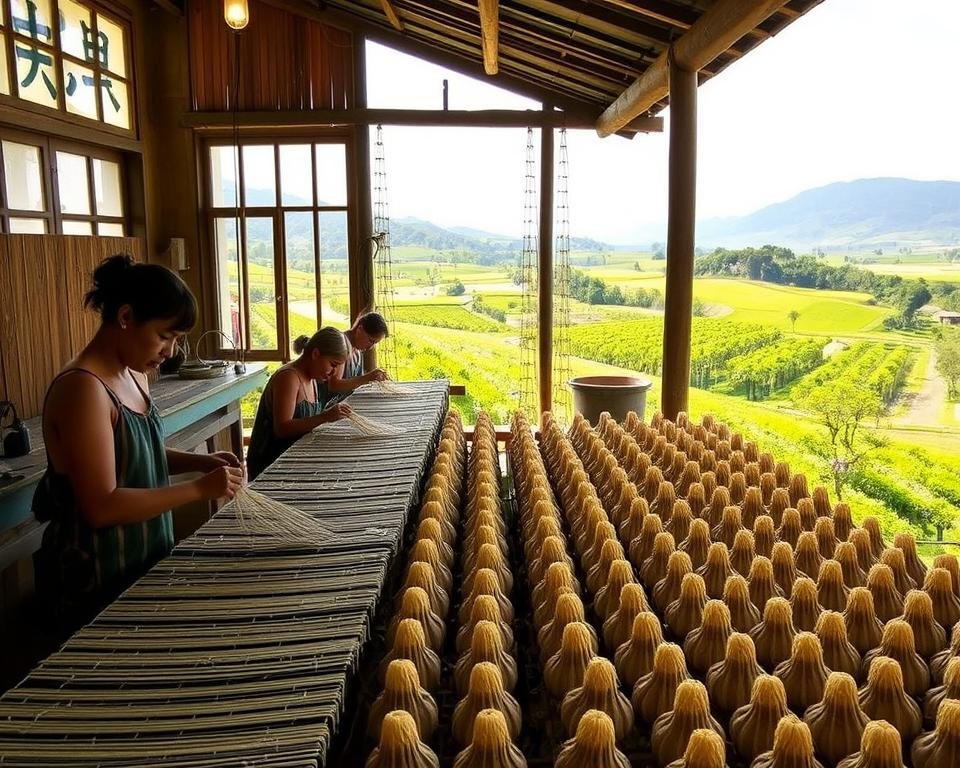
When you buy silk, look for certifications. These show that producers follow high standards. Look for OEKO-TEX and Fair Trade. They ensure sustainability and fair labor.
Certifications to Look For
Certifications are key to knowing if silk producers are ethical. Here are some important ones:
- OEKO-TEX: Makes sure textiles are safe for people and the planet.
- Fair Trade: Supports fair work and prices for producers.
- Soil Association: Shows organic farming that’s good for the environment.
| Certification | Focus Area | Benefits |
|---|---|---|
| OEKO-TEX | Environmental and social responsibility | Ensures safe and sustainable production practices |
| Fair Trade | Fair labor practices | Promotes fair prices and working conditions for producers |
| Soil Association | Organic farming | Certifies environmentally friendly farming practices |
Benefits of Buying Local
Buying local helps support ethical silk producers. It boosts the local economy and helps communities grow. For more on sustainable fashion, check out Liuba Style.
Local purchases also keep traditional silk-making alive. They let you connect directly with producers. This makes the supply chain more open and reliable.
The Future of Cultivated Silk
The future of cultivated silk looks bright, thanks to new sustainable practices. As the textile world changes, cultivated silk will be key in the sustainable luxury market.
More people want eco-friendly products because of environmental concerns. Cultivated silk fits this need well, with its lower carbon footprint and green farming methods.
Innovations in Sustainable Practices
The cultivated silk world is seeing big changes in how it’s made. New sericulture methods are being developed to lessen silk production’s environmental harm. For example, some farmers use organic mulberry leaves for silkworms, cutting down on pesticides and keeping soil healthy.
There’s also progress in how silk is processed and made. Companies are using cleaner methods, like natural dyes and less waste. This makes silk better for the planet and improves its quality.
| Innovation | Description | Benefit |
|---|---|---|
| Organic Mulberry Leaves | Using organic mulberry leaves to feed silkworms | Reduces pesticide use, maintains soil health |
| Natural Dyes | Adopting natural dyes for silk production | Reduces environmental footprint, results in unique colors |
| Cleaner Production Methods | Minimizing waste and using eco-friendly processes | Reduces waste, improves product quality |
Consumer Trends Toward Eco-Conscious Fashion
People are now more into eco-friendly fashion. The sustainable fashion movement is growing, with shoppers wanting clothes that are stylish and good for the planet.
“The future of fashion is not just about aesthetics; it’s about sustainability and responsibility.”
Cultivated silk is a perfect fit for this trend. Its green production, luxurious feel, and durability make it a top choice for those looking for eco-friendly fashion.
Looking ahead, cultivated silk will be a big part of the sustainable luxury textile world. With new sustainable methods and more demand for green fashion, the future looks bright for cultivated silk.
Where to Buy Cultivated Silk Products
Now that you know about the benefits of cultivated silk, you might wonder where to buy it. Look for reputable online retailers and brands that focus on sustainable textiles.
Reputable Online Sources
Many online stores now sell cultivated silk products, like clothes and home items. Luxury fashion brands that care about the environment are good places to start. Make sure to check for certifications that show the silk is sourced right.
Local Boutiques and Craft Fairs
Don’t forget to check out local boutiques and craft fairs for sustainable textiles. These places often get their products from local artists who care about the planet. By shopping here, you support your community and get high-quality silk products.