
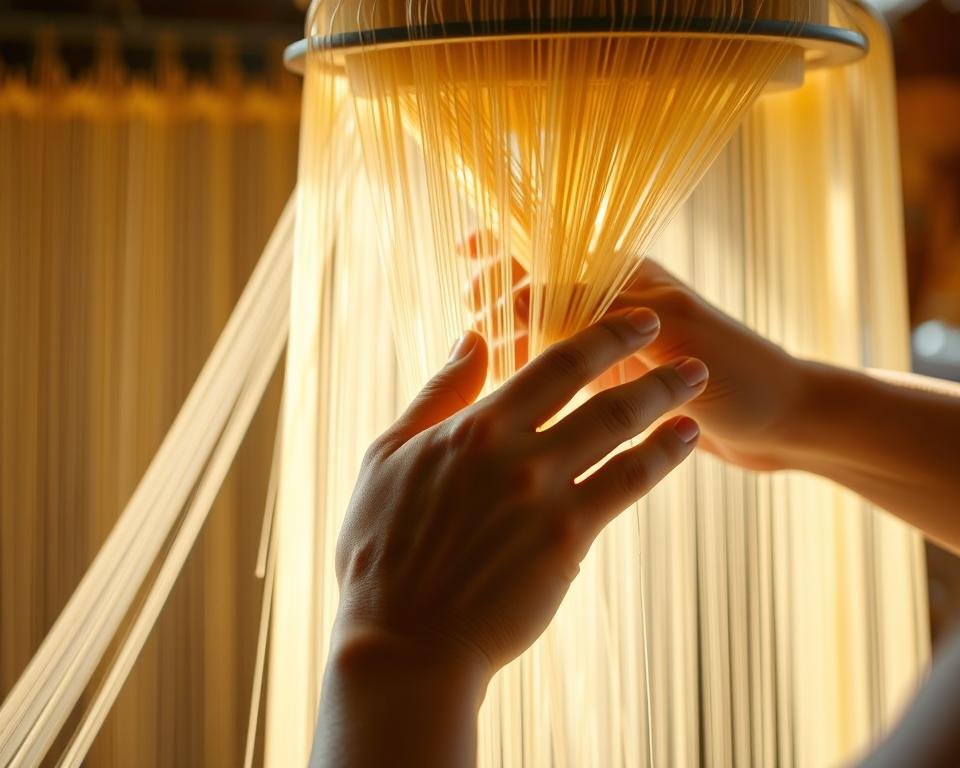
I recently found out a surprising fact. It takes about 2,000 to 3,000 silkworms to make just one kilogram of silk. This detailed process, known as silk production, has been key in making textiles for centuries. It’s very important in sericulture-based economies.
Exploring Cocoon Reeling shows me how careful and precise it is. To get the fine silk threads, you have to carefully take them out of a silkworm cocoon. This process has amazed both artists and buyers for a long time.
Key Takeaways
- The process of Cocoon Reeling is labor-intensive and requires great skill.
- Sericulture has been a significant contributor to the economy in many countries.
- Silk production involves unwinding the filament from a silkworm cocoon.
- The quality of silk is directly related to the reeling process.
- Cocoon Reeling is an ancient technique that is used today.
What is Cocoon Reeling?
Cocoon reeling is a key step in silk manufacturing. It needs precision and care. It unwinds the filament from a silkworm cocoon to make top-quality silk threads. This step is vital for the quality of silk in the textile industry.
Definition and Concept
Cocoon reeling is unwinding the filament from a silkworm cocoon with care. It focuses on keeping the silk filament’s integrity. This filament is a single, long protein fiber. Understanding the cocoon’s structure and the filament’s traits is essential.
The cocoon has a single filament that is unwound to get silk threads. The quality of these threads depends on the silkworm’s health, the cocoon’s quality, and the reeling method.
Overview of the Process
The cocoon reeling process has several stages, from preparing the cocoons to reeling the silk. Here’s a brief look at the main steps:
- Sorting and cleaning the cocoons to remove any damaged or defective ones.
- Soaking the cocoons in hot water to loosen the sericin, a gummy substance that holds the filament together.
- Reeling the silk filament onto a reel, typically using a specialized machine or tool.
- Twisting and winding the silk threads onto a spool or bobbin.
Each step needs careful attention to ensure the silk threads are not damaged. This way, the final product is of high quality.
The History of Cocoon Reeling
The art of cocoon reeling started in ancient China. Sericulture was first practiced there. It’s closely linked to the silk industry, a key part of international trade for ages.
Cocoon reeling began in the Shang Dynasty (16th-11th centuries BC). It’s believed that silkworms were first raised for silk then. The early methods are the base of today’s silk farming.
Ancient Civilizations and the Beginnings
Cocoon reeling was important for its economic and cultural impact. As trade grew, it spread from China to Asia and Europe. The Silk Road helped spread this knowledge.
Over time, cocoon reeling got better. Different cultures added to its development. For example, using hot water to soften the sericin was a big improvement.
Evolution Over Time
As silk demand rose, so did the need for better techniques. The Industrial Revolution brought new tools and machines. These changes made silk production faster and more widespread.
Now, cocoon reeling keeps getting better with new tech. Yet, old ways are also cherished for their quality silk production.
The story of cocoon reeling shows our ancestors’ creativity and skill. Knowing this history helps us understand the silk industry’s past and future challenges.
The Importance of Silkworms
Learning about silkworms helps us understand how silk is made. Silkworms create silk cocoons, which are turned into silk threads.
Life Cycle of Silkworms
The life of a silkworm is quite complex. It starts with eggs hatching after a few days. The young ones eat mulberry leaves, growing and shedding their skin several times.
When they get older, they stop eating and start making a cocoon. This cocoon is made of one long silk filament. This filament is carefully unwound to make silk.
Role in Cocoon Production
Silkworms are key in making cocoons. The quality of cocoons affects the silk’s quality. Things like diet and health can change how good the cocoons are.
| Stage | Description | Duration |
|---|---|---|
| Egg | Hatching of eggs | 10-14 days |
| Larva | Feeding and growth | 20-24 days |
| Cocoon | Spinning of cocoons | 7-10 days |
In conclusion, silkworms are very important in making silk. Knowing their life cycle and role in making cocoons is key to understanding silk production.
The Cocoon Reeling Process
To make high-quality silk, the cocoon reeling process is very important. It turns cocoons into silk threads. These threads are then used in silk manufacturing.
Cocoon Preparation
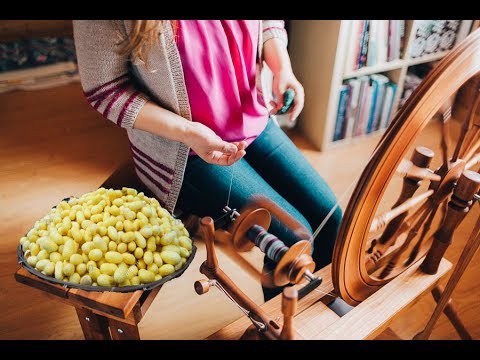
Before starting, cocoons need to be prepared. They are sorted and cleaned to get rid of dirt. Then, they are soaked in water to make the filament easier to work with.
Next, the cocoons are brushed to find the filament’s end. This step is very delicate to avoid damaging the filament.
Reeling Techniques
The reeling process unwinds the filament from the cocoon onto a reel. There are a few ways to do this:
- Hand reeling: A traditional method where the filament is unwound by hand.
- Machine reeling: A modern method that uses machines to unwind and reel the silk.
The choice of method depends on the silk quality wanted and the equipment available. The reeling process greatly affects the quality of the silk threads.
| Reeling Technique | Quality of Silk | Equipment Used |
|---|---|---|
| Hand Reeling | High | Manual |
| Machine Reeling | Variable | Mechanized |
In conclusion, the cocoon reeling process is complex and requires careful attention. It involves different methods and equipment to produce top-quality silk. By understanding these, manufacturers can improve their silk reeling process to get the best silk threads.
Tools and Equipment Needed
To make high-quality silk, farmers need the right tools and equipment for cocoon reeling. Whether using old methods or new ones, the tools used are key. They help unwind cocoons and turn the silk into threads.
Traditional Tools
Long ago, farmers used simple tools for cocoon reeling. These tools included:
- Reeling basins: These were used to soak cocoons in hot water. This loosened the sericin, a sticky substance that holds the filament together.
- Guides: Guides helped direct the filaments from the cocoons onto the reeling device.
- Reels: The reels were where the silk filament was wound after being reeled from the cocoons.
These old tools needed a lot of skill and hard work. But, they made high-quality silk.
Modern Innovations
Recently, the silk industry has seen big changes in cocoon reeling technology. New equipment has made things faster and cheaper. Some of these new tools include:
- Automated Cocoon Reeling Machines: These machines can handle many cocoons at once. This makes production much faster.
- Digital Temperature Control: This lets farmers control the water temperature precisely. It helps make the silk better.
- Advanced Reeling Devices: New reels can adjust tension and speed. This makes the reeling process better for different types of silk.
These new tools have made sericulture and silk farming more successful. They help meet the world’s growing demand for silk.
The Benefits of Cocoon Reeling
Cocoon reeling is a traditional method that produces high-quality silk. It has been perfected over centuries. Its benefits go beyond just the quality of silk.
This method creates exceptional quality silk. It unwinds the filament from the cocoon, making a strong thread. For more details, visit this resource on processing mulberry cocoons.
Quality of Silk Produced
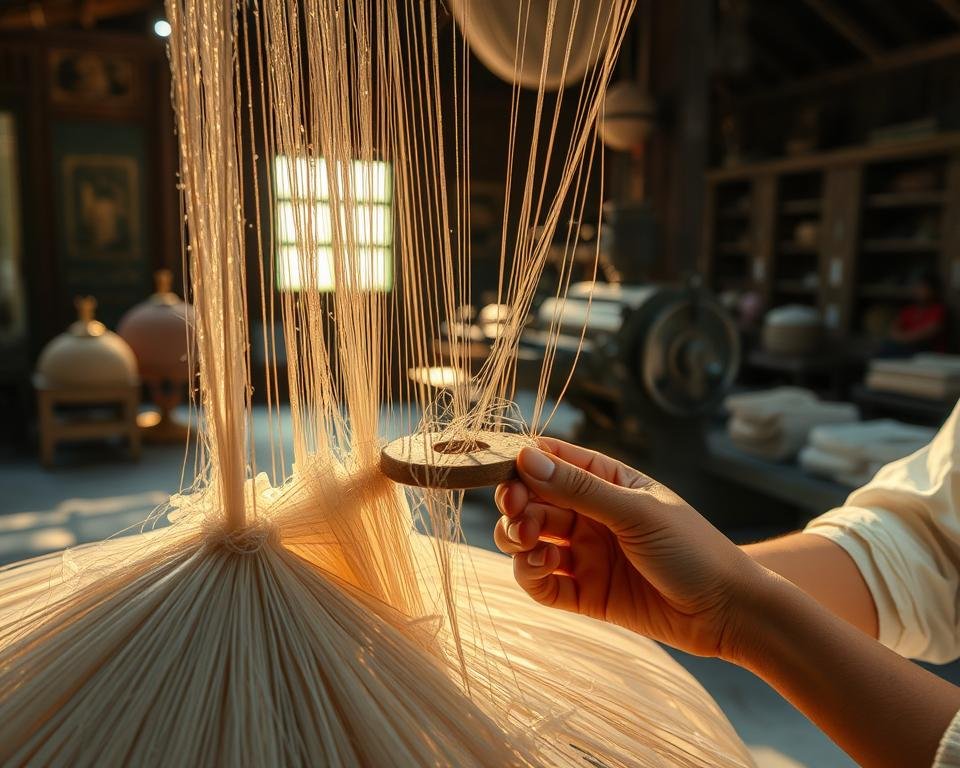
The silk from cocoon reeling is unmatched. The cocoons are handled with care, and the reeling is precise. This makes the silk threads strong and durable.
Environmental Impact
Cocoon reeling also has a low environmental impact. It’s mostly done by hand, which cuts down on machinery and energy use. The cocoons come from farms that use sustainable methods, reducing the ecological footprint of silk making.
The cocoons are a natural by-product of sericulture. Using them supports sustainable farming and cuts down on waste. This makes cocoon reeling a valuable technique in the textile world.
Applications of Cocoon Reeling
Cocoon reeling has many uses across different industries. It’s a key part of sericulture. This process gives us the raw material for some of the world’s most luxurious fabrics.
In the fashion world, cocoon reeling is very important. High-quality silk is loved for its durability and feel. Designers and makers use this silk to create beautiful clothes and accessories.
Experts say, “The silk from cocoon reeling is unmatched, making it essential in high-end fashion.” Sericulture practices help keep the silk quality high.
Fashion Industry
In fashion, silk from cocoon reeling is used for many things. It’s in elegant evening wear and fancy accessories. The silk industry loves this silk because it can be woven into detailed patterns.
Home Textiles
Cocoon reeling also helps make home textiles. Silk is used in upholstery, drapes, and bedding. It adds luxury to homes.
The demand for luxury textiles is growing. Cocoon reeling’s role in fashion and home textiles will grow too. The sericulture industry is ready to meet this demand, providing beautiful and durable silk.
“The art of cocoon reeling is a testament to the ingenuity of sericulture practices, allowing for the production of high-quality silk that is cherished worldwide.”
Challenges in Cocoon Reeling
Cocoon reeling is a key part of silk making, but it has big challenges. These issues affect the environment and the economy. The process is complex and valuable, but it’s not easy.
Sustainability Concerns
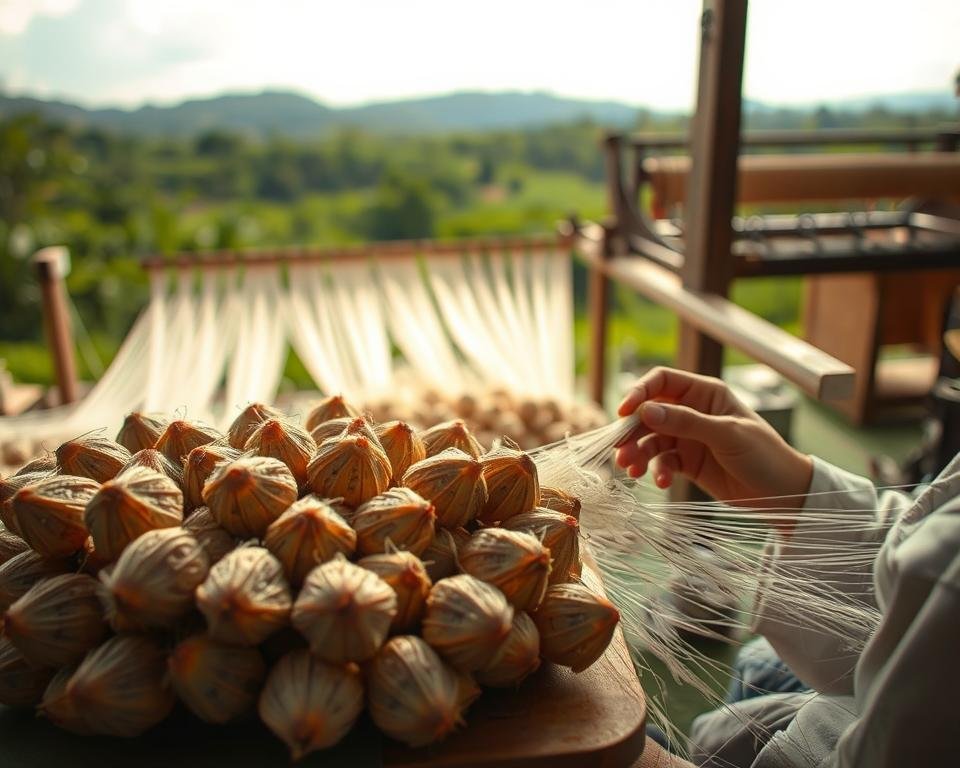
The biggest worry with cocoon reeling is its impact on the environment. The silkworm life cycle is vital for silk, and problems can spread through the whole chain. Pesticides and fertilizers harm the environment, so better practices are needed.
Working on sustainability includes organic sericulture and eco-friendly reeling methods. These steps help reduce harm to the environment and improve silk quality.
Market Pricing Fluctuations
Prices for silk can change a lot, causing big problems for the industry. Prices go up and down because of demand, supply issues, and synthetic fibers. This makes it hard for businesses to stay stable.
To deal with these price changes, producers are trying new things. They’re making different products and studying what customers want. This helps them stay ahead in a changing market.
In summary, cocoon reeling is essential for making silk, but it faces big hurdles. By focusing on being green and adapting to market shifts, the industry can keep growing.
Future of Cocoon Reeling
The sericulture industry is on the verge of a big change. This is thanks to new tech and what people want to buy. Cocoon reeling will keep being key in making silk.
Innovations in Sericulture
New tech is making cocoon reeling better and faster. These changes will help the silk industry a lot. They will let producers make more high-quality silk for customers.
Trends Shaping the Industry
What people want to buy and new ways to make textiles are changing cocoon reeling. As people care more about the planet, the industry is getting greener. This change will be very important for the silk industry’s future.