

Did you know that biocompatible silk materials are changing the medical tech world? New developments in silk biomaterials are leading to new uses in healthcare. These include everything from surgical sutures to solutions for tissue engineering.
Exploring biomedical silk, it’s clear it’s more than just fabric. It’s a complex biomaterial used in many medical ways. For example, silk-based therapies for vocal cord repair have been approved. This shows its big role in regenerative medicine.
Key Takeaways
- Biomedical silk is being used in various medical applications, including surgical sutures and tissue engineering.
- Silk biomaterials have shown promise in regenerative medicine, like vocal cord repair therapies.
- The use of biocompatible silk materials is changing medical technology.
- Silk-based biomedical applications are being developed to keep bioactive molecules safe.
- Collaborations between research groups have led to big steps forward in silk-based biomedical uses.
What is Biomedical Silk?
Biomedical silk is more than just a material. It opens doors to new medical technologies and treatments. Let’s dive into what biomedical silk is, its properties, and its history in medicine.
Overview of Silk Properties
Silk is known for being biocompatible and mechanically strong. This makes it perfect for many medical uses. Its special features include:
- Tensile strength that rivals many synthetic materials
- Elasticity that allows it to adapt to different physiological conditions
- Biodegradability, reducing the need for additional surgeries to remove implants
These traits make silk fibers great for healthcare. They’re used in sutures and tissue engineering scaffolds. Below is a table that highlights some key silk properties for biomedical uses.
| Property | Description | Biomedical Significance |
|---|---|---|
| Tensile Strength | High resistance to breaking under tension | Ideal for sutures and implants |
| Elasticity | Ability to stretch and return to original shape | Adapts to physiological movements and conditions |
| Biodegradability | Degrades over time, reducing need for removal | Minimizes complications and additional surgeries |
Historical Uses in Medicine
Silk has been used in medicine for centuries. It was first used for sutures because of its strength and how well it works with the body. The ancient Greeks and Romans used it for wound closure. It stayed a key part of surgery for a long time.
Now, silk is used for more than just sutures. It’s used in tissue engineering, wound healing, and drug delivery systems. Its long history in medicine has helped make these new uses possible. Silk’s unique properties help improve health care.
How Biomedical Silk is Created
To make biomedical silk, manufacturers extract silk proteins and turn them into medical materials. They use old and new methods to do this.
The Silk Production Process
The journey starts with getting silk fibers from silkworms. Then, they process these fibers to get the protein, mainly fibroin. This protein is key for medical uses.
They first remove the sericin coating, called degumming. Then, they dissolve the fibers in a solvent to get the fibroin. This protein is then cleaned and shaped into films, gels, or scaffolds for different medical needs.
Key steps in the silk production process include:
- Harvesting silk fibers from silkworms
- Degumming to remove sericin
- Dissolving fibers to release fibroin
- Purifying and processing fibroin into desired forms
Innovations in Silk Extraction
New methods have made silk extraction better for medical use. Technologies like recombinant DNA let us make silk proteins in labs, not just from silkworms.
New ways to process silk have also improved it. Now, it’s stronger and safer for the body. This means silk can be used in wound dressings, sutures, and tissue engineering scaffolds more than ever.
- Recombinant DNA technology for silk protein production
- Advanced processing techniques for enhanced biocompatibility
- Innovative applications in wound care and tissue engineering
These new ways of making silk are helping create better medical devices. They’re making the biomedical silk industry grow.
Applications of Biomedical Silk in Surgery
Biomedical silk is great for surgery because it’s safe for the body. It’s used in many surgeries because of its special qualities.
Sutures and Stitches
Sutures and stitches are a big use of biomedical silk in surgery. Silk sutures have been around for a long time. They are strong, last a long time, and don’t cause much reaction in the body.
Today’s biomedical silk sutures are even better. They are more safe for the body and have fewer risks.
A study in a top medical journal said silk sutures are stronger and hold better than synthetic ones. This shows silk is very useful in surgery.
Tissue Engineering Solutions
Biomedical silk is also used in tissue engineering solutions. It can help grow new tissue. This is great for fixing damaged tissues in complex surgeries.
Using silk in tissue engineering is a big step forward in surgery. An expert said silk’s safety and ability to break down make it perfect for growing new tissue.
Biomedical silk is changing surgery in many ways. It makes sutures better and helps in growing new tissue. It’s making a big difference in medical care.
The Role of Biomedical Silk in Wound Healing
Biomedical silk is a key player in wound healing. It offers many benefits that help wounds heal faster. Its special properties make it perfect for making advanced wound care products.
Antimicrobial Properties
Biomedical silk has a big plus: it fights off harmful microbes. Silk textiles in biomedicine stop many pathogens from growing. This is very important for wound healing, as infections can slow down the healing process.
The silk’s ability to fight microbes comes from its natural makeup. This is boosted by special processing methods. For example, removing sericin and processing silk fibers can make it even better at fighting off microbes.
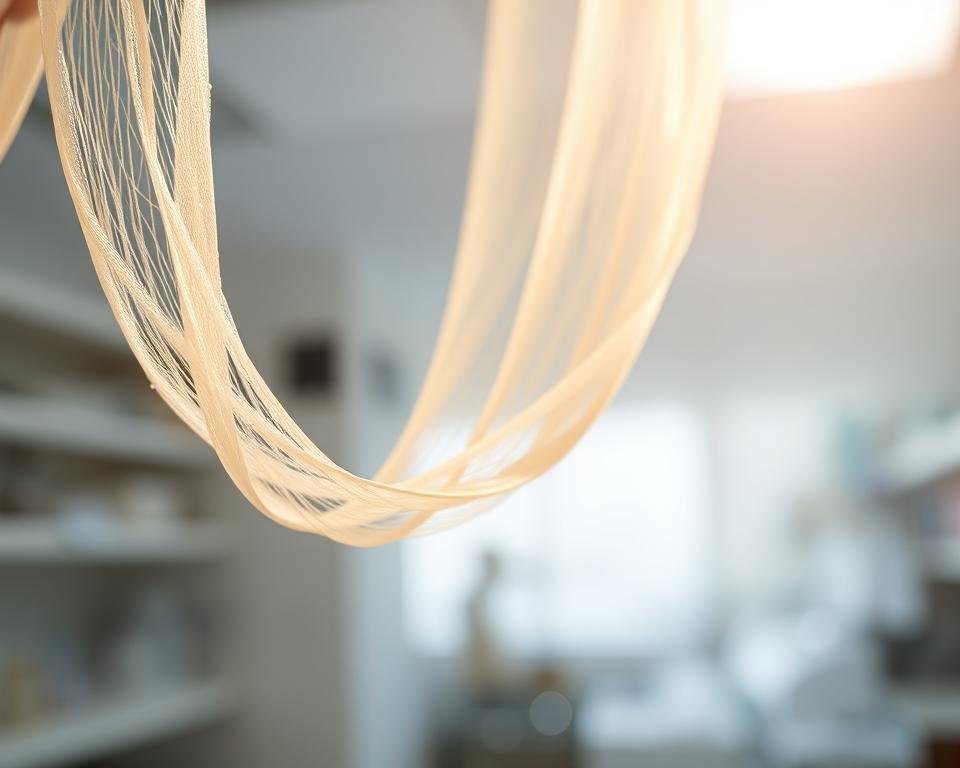
Promoting Tissue Regeneration
Biomedical silk does more than just fight microbes. It also helps in growing new tissue. Biocompatible silk materials create a good environment for healing. They are made to act like the body’s own tissue, helping damaged areas repair.
Biomedical silk helps in many ways. It encourages cell growth and helps form new tissue. This is key for closing wounds. Plus, its breakdown rate can be adjusted to fit the healing process, giving the right support at the right time.
| Property | Biomedical Silk | Traditional Materials |
|---|---|---|
| Antimicrobial Activity | High | Variable |
| Tissue Regeneration Support | Excellent | Limited |
| Biocompatibility | High | Variable |
Biomedical Silk in Drug Delivery Systems
Biomedical silk is changing drug delivery systems because it’s safe and flexible. It has a huge role in medicine, and drug delivery is a big interest area.
Controlled Release Mechanisms
Biomedical silk is great for controlled release mechanisms. It can deliver drugs just right, making treatments work better. Scientists are working on making silk release drugs in the best way possible.
Silk is safe for the body, which is a big plus for drug delivery. It can also be made to release drugs fast or slow, depending on what’s needed.
Biocompatibility Benefits
The biocompatibility benefits of biomedical silk are huge for drug delivery. Being a natural protein, silk is unlikely to cause bad reactions or harm. This makes it a great choice for drug delivery.
Using biomedical silk in drug delivery can also make patients do better. As research keeps going, we’ll see more cool uses of silk in medicine.
Comparing Biomedical Silk to Synthetic Materials
Biomedical silk is a standout in medical technology. It’s known for its unique properties and benefits. This makes it a popular choice in healthcare.
Biomedical silk has several advantages over synthetic materials. It’s more biocompatible and integrates well with the body. It can also break down at a rate that matches the body’s healing process. This reduces the need for more surgeries.
Advantages of Silk over Synthetic Alternatives
Biomedical silk is great for promoting tissue regeneration and wound healing. The silk-based medical devices act as a scaffold for cell growth. This helps the body repair itself more effectively.
The benefits of using biomedical silk include:
- Improved biocompatibility
- Enhanced tissue regeneration
- Reduced risk of complications
- Biodegradability
To show the differences between biomedical silk and synthetic materials, let’s look at a comparison table:
| Material | Biocompatibility | Biodegradability | Tissue Regeneration |
|---|---|---|---|
| Biomedical Silk | High | Yes | Enhanced |
| Synthetic Materials | Variable | No | Limited |

Environmental Impact Considerations
The environmental impact of biomedical silk versus synthetic materials is important. Biomedical silk comes from natural sources and breaks down easily. This reduces the environmental harm caused by medical waste.
Synthetic materials, on the other hand, can pollute the environment and don’t break down. This can harm the ecosystem for a long time.
Choosing biomedical silk helps improve patient care and supports a greener medical practice.
Recent Research and Developments in Biomedical Silk
In recent years, biomedical silk has seen a lot of research. This is because it’s biocompatible and biodegradable. These qualities make it great for medical use.
Breakthrough Studies
Studies have shown biomedical silk’s promise in tissue engineering and regenerative medicine. For example, silk-based scaffolds help with tissue growth and wound healing.
A study in a top medical journal showed silk fibroin’s power. It creates scaffolds that support cell growth and help fix damaged tissues.
Contributions to Medical Technology
Biomedical silk has many uses in medical tech. It’s used in advanced wound dressings, implants, and drug delivery systems. Its biocompatibility and strength make it perfect for these roles.
A comparison of biomedical silk with other materials is shown in the table below:
| Material | Biocompatibility | Biodegradability | Mechanical Strength |
|---|---|---|---|
| Biomedical Silk | High | Yes | Excellent |
| Synthetic Polymers | Variable | Yes | Good |
| Collagen | High | Yes | Fair |
The table shows why biomedical silk is a top choice. It’s biocompatible and strong, making it ideal for medical needs.
Case Studies: Success Stories with Biomedical Silk
Biomedical silk has led to many breakthroughs in medicine. Researchers and doctors are finding it very useful. It’s improving patient care and leading to new medical uses.
Clinical Trials and Patient Outcomes
Many clinical trials show how well biomedical silk works. For example, silk-based sutures are better than old materials. They cause less reaction in the body.
A study in the Journal of Biomedical Materials Research found silk wound dressings heal faster. They also leave less scar.
Silk implants are also making a big difference in orthopedic surgeries. They help bones heal better and reduce swelling. Silk’s special properties make it perfect for these uses.
Industry Adoption Examples
Biomedical silk is now used in many industries. Medical device makers are using it in wound care dressings and implantable devices. A big company is even testing a silk scaffold for tissue engineering.
The textile industry is also benefiting. New silk fabrics are being made for medical clothes and implants. These innovations are helping patients and opening new research paths.
As biomedical silk use grows, we’ll see more exciting medical breakthroughs. Its future looks bright, promising to change medical technology and care.
Future Prospects for Biomedical Silk in Healthcare
The future of biomedical silk in healthcare looks bright. New uses for it are being found as research grows. This makes it even more important in medical technology.
Emerging Technologies and Innovations
One exciting area is biocompatible silk materials for healing and growing new tissue. These materials help the body heal and grow new tissue. This gives hope to those with serious health issues.
Also, medical silk applications are leading to better drug delivery systems. These systems release drugs slowly and effectively. This makes treatments work better and have fewer side effects.
- Enhanced biocompatibility
- Improved drug delivery mechanisms
- Increased use in tissue engineering
Potential Challenges Ahead
Despite its promise, biomedical silk faces challenges. Making more of it without losing quality is hard. Also, making sure it’s safe and works well in the body is key.
To tackle these issues, more research and investment are needed. Working together, the industry, researchers, and regulators can unlock biomedical silk’s full power in healthcare.
Looking ahead, combining new tech with biomedical silk will lead to more innovation. With the right steps, biomedical silk will keep changing medical technology for the better.
Conclusion: The Future of Biomedical Silk
Biomedical silk is changing medical technology with its special properties and many uses. This article has shown how silk biomaterials are making a big impact on healthcare.
Key Benefits and Future Directions
Biomedical silk has many advantages in medicine. It helps wounds heal faster, regenerates tissues better, and delivers drugs more effectively. It’s also being looked at for use in making tissues and for surgery.
To make the most of biomedical silk, we need more research and money. By learning more about silk biomaterials, we can find new ways to help patients and improve healthcare.
As research goes on, we’ll see more creative ways to use biomedical silk in medicine. With its many benefits, biomedical silk is set to be a key player in future medical technology.