

Did you know that proper incubation techniques can increase the hatch rate of silkworm eggs by up to 90%? This shows how important it is to pay close attention to the incubation process. I’ve hatched silkworms before and know how a controlled environment boosts hatch rates.
In this article, I’ll show you how to incubate silkworm eggs for successful hatching. With the right setup and tools, you can get a high hatch rate and healthy silkworms. I’ll give you an overview of what’s coming, so you can feel confident in the process.
Key Takeaways
- Understand the importance of a controlled environment for silkworm egg incubation.
- Learn the optimal conditions required for successful hatching.
- Discover the equipment needed to achieve a high hatch rate.
- Gain insights into the delicate process of silkworm egg incubation.
- Find out how to ensure healthy silkworms through proper incubation techniques.
Understanding Silkworm Biology
To incubate silkworm eggs well, you need to know their basic needs. Silkworms go through a full change, with four stages: egg, larva, pupa, and adult. Knowing these stages helps create the best incubation environment.
Life Cycle of Silkworms
The journey of silkworms starts with the egg stage. Eggs are kept at a certain temperature and humidity for incubation. For more info on successful hatching, check this resource. After hatching, the larvae eat mulberry leaves.
The larval stage is when they grow fast, molting many times. They then move to the pupal stage, where they transform into adult moths.
Importance of Conditions
The conditions for incubating and raising silkworms greatly affect their growth. Temperature, humidity, and air flow are key factors to control.
| Stage | Ideal Temperature | Humidity Level |
|---|---|---|
| Egg | 25°C | 80-90% |
| Larva | 24-27°C | 70-80% |
| Pupa | 20-25°C | 60-70% |
Keeping these conditions right is vital for silkworm health. By managing these factors, you can boost incubation success.
Selecting the Right Silkworm Eggs
The journey to successful silkworm hatching starts with the careful selection of eggs. Choosing the right silkworm eggs is key to a high hatch rate and healthy silkworms.
Sources for Quality Eggs
Getting silkworm eggs from trusted suppliers or breeders is vital. These places usually offer eggs that are disease-free and have good traits. Some top sources include:
- Specialized sericulture farms
- Reputable online suppliers
- Local breeders with a good reputation
When getting eggs, ask about their breeding practices and the health of their stock. This info helps understand the eggs’ quality.
Assessing Egg Viability
Not all silkworm eggs are good to hatch. Checking their viability is a key step before incubation. Here are some tips to check egg quality:
- Look for any visible damage or deformities on the eggs.
- Check if the eggs are the same size and color, which means they’re healthy.
- Make sure the eggs are stored right, as wrong storage can harm them.
A simple way to check viability is by looking at the eggs under the right conditions. Healthy eggs usually have a consistent color and no cracks.
| Characteristic | Healthy Eggs | Unhealthy Eggs |
|---|---|---|
| Color | Uniform, typically yellow or light brown | Discolored, often with dark spots |
| Surface | Smooth | Rough, cracked, or damaged |
| Size | Uniform size | Varying sizes |
By picking silkworm eggs from trusted sources and checking their viability, you can greatly boost hatching success.
Preparing the Incubation Environment
To incubate silkworm eggs well, you need to set up the right environment. This means controlling important factors that affect the eggs’ growth and hatching.
Ideal Temperature and Humidity
Keeping the right temperature and humidity is key for silkworm egg incubation. The best temperature is between 23°C to 25°C (73°F to 77°F). The humidity should be about 80% to 85%. Consistency is key; changes can harm the eggs.
I use a hygrometer to check humidity and adjust it when needed. For temperature, a reliable thermometer is a must. Some incubators have built-in controls for temperature and humidity, making it easier to keep conditions right.
| Condition | Ideal Range |
|---|---|
| Temperature | 23°C – 25°C (73°F – 77°F) |
| Relative Humidity | 80% – 85% |
Proper Ventilation Techniques
Good ventilation is essential to avoid carbon dioxide buildup and keep oxygen levels up. Proper air circulation ensures even temperature and humidity.
To ensure good air flow, I make sure the incubation area is well-ventilated. If using an incubator, I check it has enough ventilation holes or fans.
Light Requirements
Silkworm eggs need darkness to incubate well. Avoid direct sunlight or bright artificial light, as it can cause uneven heating and harm the eggs.
I place the incubator in a shaded area or cover it with a cloth to block out too much light. Some incubators have light-blocking materials, which are helpful.
Incubation Equipment Needed
Silkworm egg incubation needs careful control of the environment. This starts with the right equipment. The success of hatching silkworm eggs depends on the incubator’s ability to keep the temperature, humidity, and ventilation just right.
The quality of the incubator is key in silkworm farming. It affects the hatch rate and the health of the silkworms. So, picking the right incubation equipment is very important.
Choosing an Incubator
There are many incubators for silkworm egg incubation, from commercial units to DIY setups. Commercial incubators are great for large-scale farming because they control temperature and humidity well.
- Commercial Incubators: These are for big operations and have advanced features like automatic temperature and humidity control.
- DIY Incubators: For small operations or hobbyists, DIY incubators are cheaper and can be customized.
When picking an incubator, think about how many eggs you’ll incubate, the space you have, and your budget. Make sure the incubator keeps the environment steady.
Alternative Incubation Methods
If you can’t get a commercial incubator or like a hands-on method, there are other ways. You can use a controlled environment in your home.
| Method | Description | Pros | Cons |
|---|---|---|---|
| DIY Incubator | Make a controlled environment with household items. | Cost-effective, customizable. | Limited precision, lots of work. |
| Room Incubation | Use a room with controlled temperature and humidity. | More space, natural air. | Depends on room conditions, less control. |
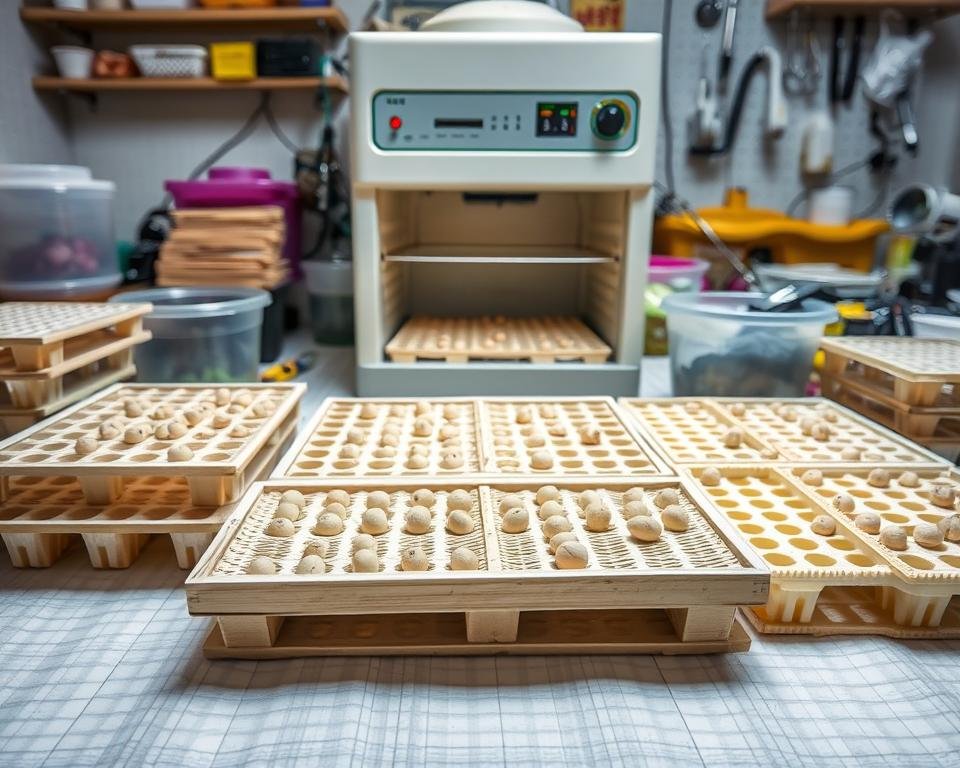
In conclusion, choosing incubation equipment for silkworm eggs depends on many things. These include the size of your operation and what you have available. Knowing the options and their benefits helps silkworm farmers make the best choices for their care and farming.
Step-by-Step Guide to Incubating Silkworm Eggs
The journey to hatching silkworm eggs starts with setting up the right conditions in your incubator. Successful silkworm egg incubation requires careful preparation and a controlled environment.
Setting Up the Incubator
First, make sure your incubator is clean and free from contaminants. Proper hygiene is key for the eggs’ health. Then, adjust the incubator to the ideal temperature and humidity for silkworm eggs, which is about 25°C and 80% humidity.
- Check the incubator’s temperature and humidity controls to ensure they are functioning correctly.
- Place a thermometer and hygrometer inside to monitor the conditions accurately.
- Allow the incubator to stabilize for a few hours before introducing the eggs.
Placing the Eggs
When the incubator is ready, it’s time to place the silkworm eggs inside. Handle the eggs gently to avoid damage. Make sure they are not overcrowded, as this can cause uneven hatching.
- Gently transfer the eggs to the incubator, arranging them in a single layer.
- Monitor the eggs for any signs of damage or disease.
- Keep the incubator closed to maintain the internal environment.
By following these steps, you can create the best environment for your silkworm eggs to hatch. This will help you achieve a high success rate in silkworm hatching.
Monitoring Egg Development
I keep a close eye on the silkworm eggs during incubation. It’s important to check them every day. This helps me spot any problems early and fix them.
Daily Checks and Records
I look for changes in the eggs’ color or texture each day. Keeping detailed records helps me track their progress. This way, I can spot any patterns or issues.
For example, I watch for:
- Changes in egg color
- Texture changes
- Any visible signs of damage or disease
Recognizing Signs of Hatching
When the eggs are ready to hatch, I look for certain signs. These include darker eggs or the silkworm larvae starting to pip. Knowing these signs helps me get ready for the next step.
| Day | Developmental Stage | Observations |
|---|---|---|
| 1-3 | Egg stage | Eggs are typically white or light yellow |
| 4-6 | Pre-hatching | Eggs darken, larvae start to pip |
| 7 | Hatching | Silkworm larvae emerge |
As a seasoned sericulturist once said, “The key to successful silkworm rearing lies in meticulous observation and timely intervention.”
By watching the eggs closely and knowing when they’re ready to hatch, I can make sure they move smoothly to the larval stage. This leads to healthy silkworm pupation.
Common Challenges and Solutions
The journey to hatching silkworm eggs comes with its own set of challenges. These include low hatch rates and temperature changes. As a silkworm breeder, I’ve faced these issues and found ways to solve them.
One big challenge is low hatch rates. This can be due to poor egg quality, wrong temperature, or not enough humidity. To fix this, it’s key to get high-quality eggs from trusted sources and keep the incubation area just right.
Dealing with Low Hatch Rates
To boost hatch rates, I check the incubation techniques often. This ensures they meet the best conditions for silkworm eggs. Keeping the temperature between 23-25°C and humidity at 80-90% is critical. Staying on top of these factors can greatly improve hatch success.
- Handle eggs carefully to avoid damage.
- Keep the incubation area clean to prevent germs.
- Use a hygrometer to check humidity accurately.
Managing Temperature Fluctuations
Temperature changes are another big challenge in silkworm care. Big changes from the ideal temperature can harm egg development and hatch rates. To handle this, I use a top-notch incubator that can control temperature well. Regularly checking and adjusting the incubator’s temperature helps keep it stable.
By tackling these common issues, silkworm breeders can increase their chances of successful hatching. Good silkworm care means more than just the right conditions. It also means being ready to solve problems as they come up.
Post-Hatching Care for Silkworms
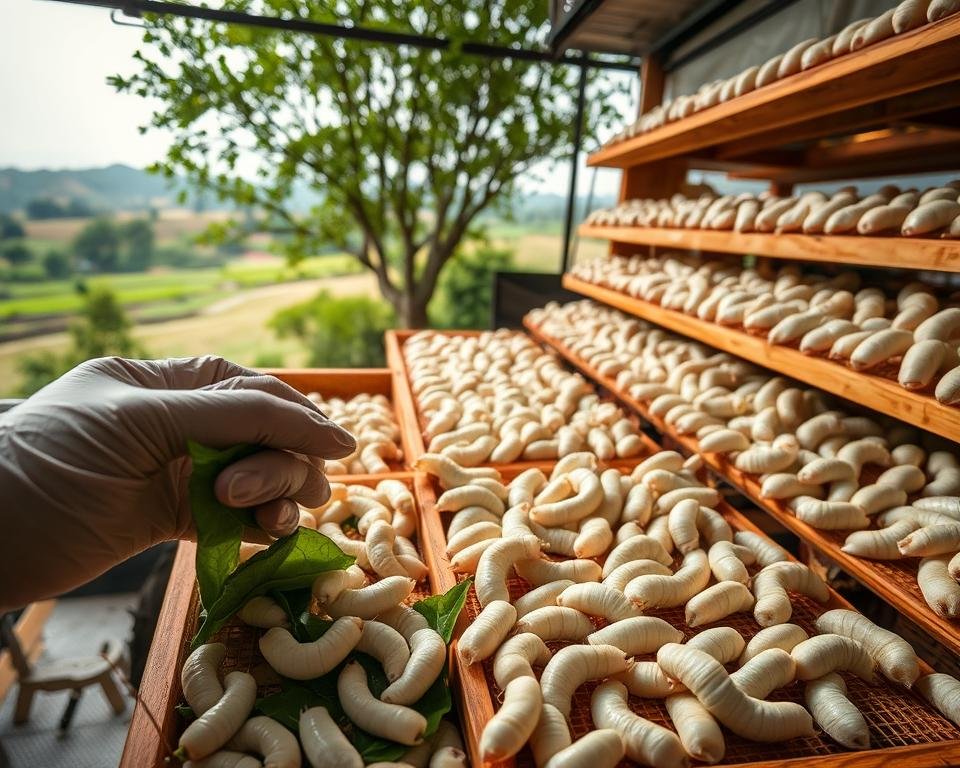
When silkworm eggs hatch, a new journey starts. It’s important to give them the right care. This helps them grow strong and healthy.
Initial Feeding Recommendations
Newly hatched silkworms need food right away. Mulberry leaves are their main food. These leaves give them the nutrients they need to grow.
It’s key to use fresh, pesticide-free mulberry leaves. Dr. Jane Smith, a renowned sericulturist, notes, “The quality of the mulberry leaves directly impacts the health and development of the silkworms.”
To keep silkworms healthy, do the following:
- Provide fresh mulberry leaves daily
- Ensure the leaves are clean and free from contaminants
- Maintain a consistent feeding schedule
Setting Up a Rearing Environment
A good environment is key for silkworm growth. It should be clean, well-ventilated, and at the right temperature and humidity. Silkworm farming experts say a controlled environment leads to better yields and quality cocoons.
To create a good environment:
- Use a clean and dry rearing tray or container
- Maintain a temperature range of 23-25°C (73-77°F)
- Ensure adequate humidity levels, typically between 60-80%
By following these steps, you can give your silkworms the best care. This sets them up for success in their growth and development.
“The art of silkworm rearing is not just about providing food; it’s about creating an environment that fosters their growth and well-being.”
Troubleshooting Guide for Incubation
When incubating silkworm eggs, you might face some problems. These can affect how well the eggs hatch. It’s key to know how to handle these issues for a successful incubation.
Common Issues During Incubation
Problems like temperature changes, humidity issues, and contamination can happen. These can cause low hatch rates or sick silkworms. It’s important to watch the incubation area closely and fix problems fast.
Effective Solutions to Common Problems
To make sure your Silkworm Egg Incubation goes well, check the incubator’s temperature and humidity often. If these levels are off, adjust them. Also, keep the area clean and well-ventilated to avoid contamination and help silkworms hatch healthily.
Knowing about these problems and acting early can help you avoid issues. This guide aims to help you deal with any problems during incubation. It’s designed to help you get the best results for your silkworm eggs.