

Did you know silkworms are key to making silk, a fabric loved all over the world? Starting out with silkworm care might seem tough, but it can be very rewarding. It’s important to take good care of them for their growth.
In this guide, I’ll show you how to care for your silkworms, focusing on their food needs. Giving them the right food is key to their health and success. I’ll share tips on how to make sure they do well under your care. With patience and the right methods, you can become great at caring for silkworms.
Key Takeaways
- Understand the nutritional needs of silkworms for optimal growth.
- Learn how to provide the best diet for your silkworms.
- Discover the importance of proper silkworm care.
- Get tips on creating a healthy environment for silkworms.
- Find out how to monitor and maintain silkworm health.
What Are Silkworms?
Silkworms are key players in the silk industry, worth billions of dollars. They are the young of the Bombyx mori moth. These young ones love to eat mulberry leaves, which are full of nutrients.
Knowing how silkworms grow is important for raising them well. This knowledge helps in sericulture, the art of breeding silkworms for silk.
Life Cycle Stages of Silkworms
Silkworms go through four main stages: egg, larva, pupa, and moth. During the larval stage, they eat mulberry leaves. This helps them store energy for later stages.
- The egg stage is the start of a silkworm’s life, where they are very vulnerable.
- The larval stage is key for sericulture. It’s when silkworms eat mulberry leaves and grow.
- The pupal stage is when the silkworm changes into a moth.
- The moth stage is the last stage. Adult silkworms mate and lay eggs for the next generation.
Importance of Silkworms in Sericulture
Sericulture depends on silkworm health and nutrition. A well-fed silkworm is essential for making high-quality silk.
| Stage | Nutritional Needs | Impact on Sericulture |
|---|---|---|
| Egg | Precise temperature and humidity | Healthy eggs start sericulture strong. |
| Larva | Mulberry leaves rich in nutrients | Good nutrition here is key for silk. |
| Pupa | Minimal nutritional needs | The pupal stage is vital for silk quality. |
| Moth | No nutritional needs | Healthy moths are important for successful mating and egg-laying. |
In conclusion, knowing about silkworms and their life cycle is essential for sericulture. By giving the right food at each stage, sericulturists can make high-quality silk.
Why Feed Silkworms Properly?
Feeding silkworms right is key for their health and success. If you’re into raising silkworms, knowing about a good diet is vital. It’s all about successful sericulture.
A silkworm’s diet affects its growth, health, and silk quality. A well-fed silkworm fights off diseases better. This makes raising silkworms a big deal. We’ll look into how good food helps silkworms thrive.
Impact on Growth and Health
A good diet is essential for silkworm growth and health. Silkworms on a nutritious diet grow faster and stay healthier. Their diet quality impacts their silk cocoon quality.
Some key benefits of a healthy diet for silkworms include:
- Increased growth rates
- Improved disease resistance
- Better silk production quality
Benefits of Quality Nutrition
Quality nutrition is key to sericulture success. Silkworms on a balanced diet produce better silk. This is the main goal of silkworm nutrition. Quality nutrition boosts silkworm health and productivity.
| Nutritional Aspect | Impact on Silkworms |
|---|---|
| Balanced Diet | Improved health and growth |
| High-Quality Food | Better silk production |
| Adequate Nutrition | Increased disease resistance |
By focusing on a healthy silkworm diet, you boost your silkworms’ health and productivity. This improves their well-being and helps your sericulture succeed.
Best Foods for Silkworms
Choosing the right food is key for silkworms to grow well. Silkworms eat a lot and their diet affects their health and how well they produce silk.
Mulberry Leaves: The Ideal Choice
Mulberry leaves are the best food for silkworms because they are very nutritious. They give silkworms the nutrients they need to grow and develop. Mulberry leaves are full of proteins, vitamins, and minerals that help silkworms stay healthy.
Alternative Diet Options
While mulberry leaves are the traditional food for silkworms, there are other options. These alternatives are good when mulberry leaves are hard to find. Some options include artificial diets made to give silkworms the nutrients they need.
But, it’s important to remember that these alternatives might not be as good as mulberry leaves. So, it’s important to check the nutritional value of any alternative diet before choosing it.
Feeding Schedule for Silkworms
Feeding silkworms right is key in sericulture. It needs careful planning. A good feeding schedule helps silkworms grow strong and healthy.
It’s important to know what silkworms need at each stage. This helps in making the feeding schedule fit their needs at different times.
Young vs. Mature Silkworms
Young silkworms eat more often and in smaller amounts. As they get bigger, they eat more and bigger leaves.
- Young Silkworms: Need frequent, small meals of tender mulberry leaves.
- Mature Silkworms: Can be fed less frequently but in larger quantities as they grow.
Frequency and Quantity of Feedings
Finding the right amount and timing of food is key. Too much or too little can harm them. So, finding the perfect balance is important.
- Watch how much they eat and adjust the schedule as needed.
- Make sure fresh mulberry leaves are always ready.
- Change how much food they get based on their size.
With a well-planned feeding schedule, you can give your silkworms the best care. This helps them grow well and produce high-quality silk.
How to Prepare Mulberry Leaves
To keep your silkworms thriving, it’s essential to know how to prepare their primary food source: mulberry leaves. Proper preparation involves several steps that ensure the leaves are safe and nutritious for consumption.
Cleaning and Storing Leaves
The first step in preparing mulberry leaves is cleaning them thoroughly. This involves gently washing the leaves with clean water to remove any dirt, pesticides, or other contaminants. After washing, it’s important to dry the leaves properly to prevent moisture from causing mold or bacterial growth.
Once cleaned and dried, storing the mulberry leaves in a cool, dry place helps maintain their freshness. Using a breathable container or bag can help keep the leaves fresh for a longer period.
Cutting and Serving Sizes
Cutting mulberry leaves into appropriate sizes is vital for the comfort and feeding efficiency of your silkworms. For younger silkworms, smaller pieces are recommended, while larger pieces can be given to mature silkworms.
| Silkworm Stage | Recommended Leaf Size | Feeding Frequency |
|---|---|---|
| 1st to 2nd instar | Small, tender pieces | Every 2-3 hours |
| 3rd to 4th instar | Medium-sized pieces | Every 3-4 hours |
| 5th instar | Large pieces or whole leaves | Every 4-5 hours |
By following these guidelines, you can ensure that your silkworms receive the best possible nutrition from their mulberry leaves. This promotes healthy growth and development.
Recognizing Healthy Silkworms
To keep your silkworms healthy, it’s important to know what makes them well. Healthy silkworms are active, eat a lot, and look good.
Key Characteristics of Wellness
Healthy silkworms show certain signs. They have:
- A robust appetite, showing they’re ready to eat and grow.
- Active movement, as they move and eat a lot.
- A healthy appearance, with a plump body and bright color.

Signs of Malnutrition and Stress
On the other hand, stressed or malnourished silkworms show different signs. It’s key to spot these signs early to help them.
- Lethargy or less activity, which can mean poor nutrition or stress.
- Discoloration or unusual color changes, which might mean health problems.
- A poor appetite, showing they’re not getting the right food or have a disease.
By watching for these signs, you can make sure your silkworms stay healthy and productive.
Common Mistakes When Feeding Silkworms
Feeding silkworms right is key to their health. It’s not easy, and mistakes can harm them. Knowing what they need to eat is very important.
Overfeeding and Underfeeding
Many people make mistakes with overfeeding and underfeeding. Too much food can cause problems, while too little can stunt their growth.
Watch how much your silkworms eat and adjust their food times. Young ones need to eat more often than older ones.
Ignoring Food Variability
Not considering the quality of food is another big mistake. Mulberry leaves, the best food for them, can change in quality. This depends on the tree’s health and the leaves’ age.
Make sure your silkworms get a balanced diet. You can add other foods or change the mulberry leaves. This helps deal with the differences in food quality.
Knowing these mistakes and how to avoid them can really help your silkworms. Whether you’re experienced or new, feeding them right is essential for their success.
Environmental Considerations for Feeding
Keeping the environment right is key for silkworm health. A good place to live helps them grow and stay healthy all their lives.
Optimal Temperature and Humidity
Silkworms need the right temperature and humidity. They do best in temperatures between 23°C to 25°C. Humidity should be 60% to 80%.
Using a thermometer and hygrometer helps keep these levels right. This makes sure the silkworms are not stressed.
Pest and Disease Control
Pests and diseases can harm silkworms. It’s important to check them and their home often. Ants, spiders, and mites are common pests that need to be managed.
To stop diseases, keep things clean and well-ventilated. Good sanitation and isolating sick silkworms are important steps.
By paying attention to these environmental factors, you can make a healthy space for your silkworms. This helps them thrive and do well.
Supplementing Silkworm Diets
Mulberry leaves are key for silkworms, but sometimes they need more. Supplements can boost their health and silk quality.
Nutritional Supplements
Supplements add nutrients missing in mulberry leaves. They include vitamins, minerals, and more. These are vital for growth and silk production.
Types of Nutritional Supplements
- Vitamin supplements to enhance overall health
- Mineral supplements to support growth and development
- Probiotics to improve digestion and nutrient absorption
Choose supplements made for silkworms or similar insects. Quality is key to avoid harm.
When and How to Supplement
Decide when and how to add supplements based on age, health, and diet quality. Supplements are best during active growth phases.
| Age of Silkworms | Type of Supplement | Frequency of Supplementation |
|---|---|---|
| 1st to 2nd instar | Vitamin supplement | Once a week |
| 3rd to 4th instar | Mineral supplement | Twice a week |
| 5th instar | Probiotics | Thrice a week |
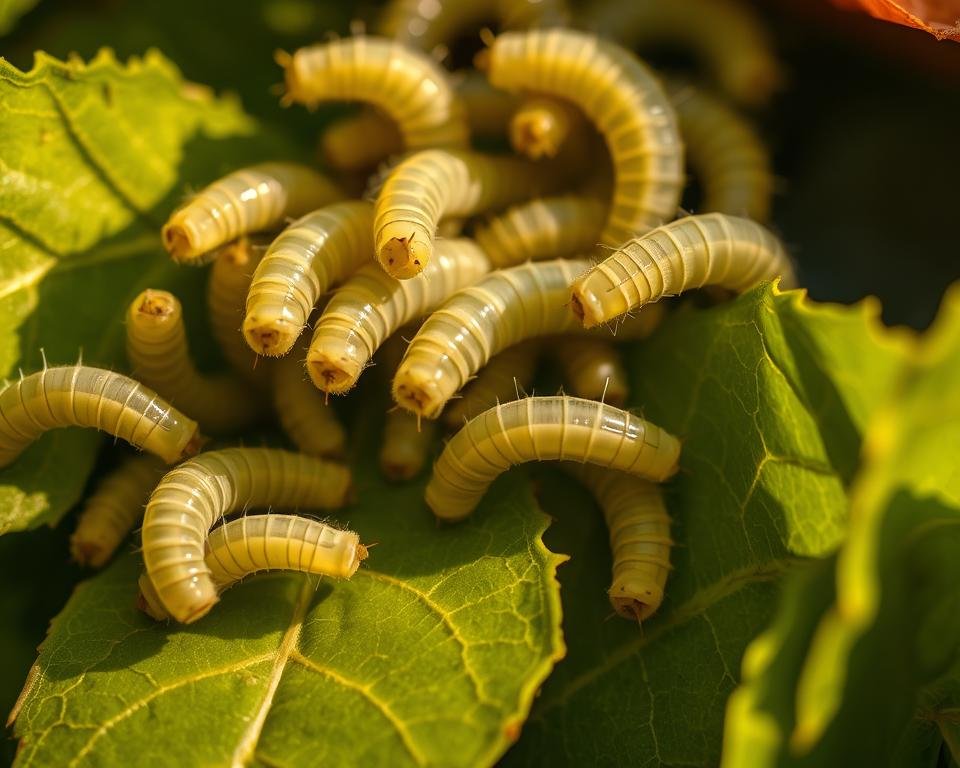
Watch how silkworms react to supplements and adjust as needed. Too much can harm. Always follow the right amounts and keep an eye on their health.
With the right supplements, you can improve your silkworms’ health and silk quality. This leads to better silk production.
Keeping Your Feeding Area Clean
A clean feeding area is key to successful silkworm care. It’s not just about being clean. It’s about creating a healthy space for your silkworms to grow and thrive.
Importance of Hygiene
Poor hygiene can cause diseases and stress in silkworms. This can harm their health and productivity. Keeping the feeding area clean and free from waste is vital. Regular cleaning and proper waste disposal are key practices to prevent disease.
Silkworms are very sensitive to their surroundings. A clean feeding area reduces stress and promotes healthy growth. Hygiene is essential for your silkworms’ health.
Best Practices for Cleanliness
To keep the feeding area clean, follow these steps:
- Clean the area regularly, removing waste and leftover food.
- Use a gentle disinfectant safe for silkworms to sanitize.
- Ensure feeding trays or containers are cleaned and dried before refilling.
- Check the area daily for signs of contamination or disease.
These practices will greatly improve your silkworms’ health. Here’s a simple cleaning schedule:
| Day | Cleaning Task |
|---|---|
| Monday, Wednesday, Friday | Remove waste and clean feeding trays |
| Tuesday, Thursday | Sanitize feeding area with a gentle disinfectant |
| Saturday | Deep clean the entire feeding area |
Stick to a regular cleaning schedule for a clean environment. This will help your silkworms thrive. Remember, a clean feeding area is not just a good idea. It’s a must for successful silkworm rearing.
Transitioning Silkworms to Different Foods
Silkworms grow and their diet needs change. It’s important to know when and how to switch their food. A good diet change can help them stay healthy and productive.
Signs It’s Time to Change Diet
It’s key to know when to change your silkworms’ diet. Look out for these signs:
- Slow growth or development
- Changes in appetite or feeding behavior
- Visible signs of malnutrition or stress
If you see these signs, it’s time to change their diet. For example, mulberry leaves are perfect for silkworms. But, the quality and age of the leaves matter a lot.
| Diet Change Indicator | Possible Cause | Action |
|---|---|---|
| Slow growth | Insufficient nutrients | Switch to fresher mulberry leaves |
| Change in appetite | Leaf quality or age | Try different mulberry leaf variety |
Gradual Introduction of New Foods
When adding new foods, do it slowly to avoid stress. Start by mixing a little of the new food with their old diet. Then, slowly add more of the new food over time.
For example, if you’re changing mulberry leaves, start by mixing both types for a few days. Then, switch fully to the new type.
By knowing when to change their diet and introducing new foods slowly, you can keep your silkworms healthy. This leads to successful raising silkworms.
Final Tips for Feeding Silkworms
Feeding silkworms well needs careful attention and flexibility. Silkworms have special food needs for them to grow and stay healthy. They should eat every day for fast growth or every other day for slower growth.
Remember, silkworms eat a lot, so have plenty of food ready. Make sure to throw away any leftover food to stop mold and bacteria.
Adjusting Your Approach
Watching how your silkworms react to their food is key. Change how you feed them based on their growth, health, and overall look. For more tips on caring for silkworms, check out Coastal Silkworms.
Community Engagement
Talking with other silkworm keepers is very helpful. Sharing and learning from each other can make you a better silkworm caretaker. By keeping up with new info, you can give your silkworms the best care possible.